What to see in Ametista do Sul: the guide to the world's amethyst capital
There is a town in the north-west of Rio Grande do Sul where a semi-precious stone is the raw material for almost everything: it lines the church, decorates the square, fills the shop windows and has supported families for almost a century. Ametista do Sul, about 450 kilometres from Porto Alegre, is considered the world capital of amethyst, and what it has to show goes far beyond what the name suggests.
This guide brings together what to see in Ametista do Sul: the one-of-a-kind church, the mines that still blast rock, the museums of giant stones, the underground winery and the surprises along the way. It is the itinerary that our November expedition covers as a group, and it also includes the Salto do Yucumã on the first morning.
The Igreja Matriz São Gabriel: the town's signature attraction
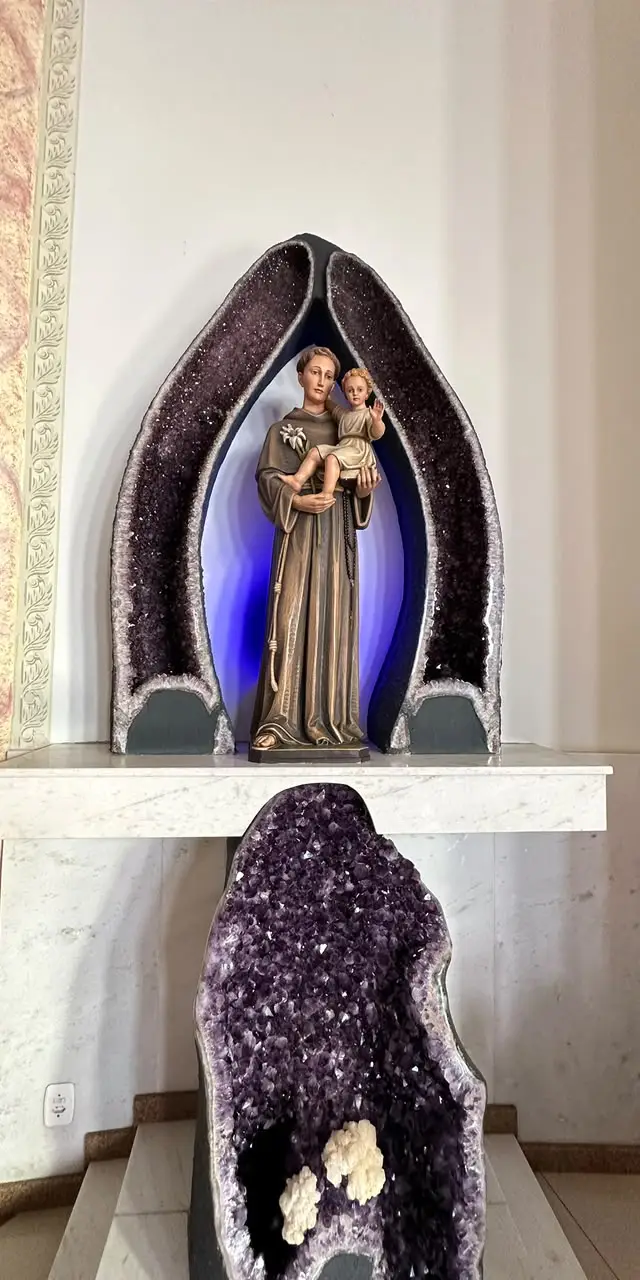
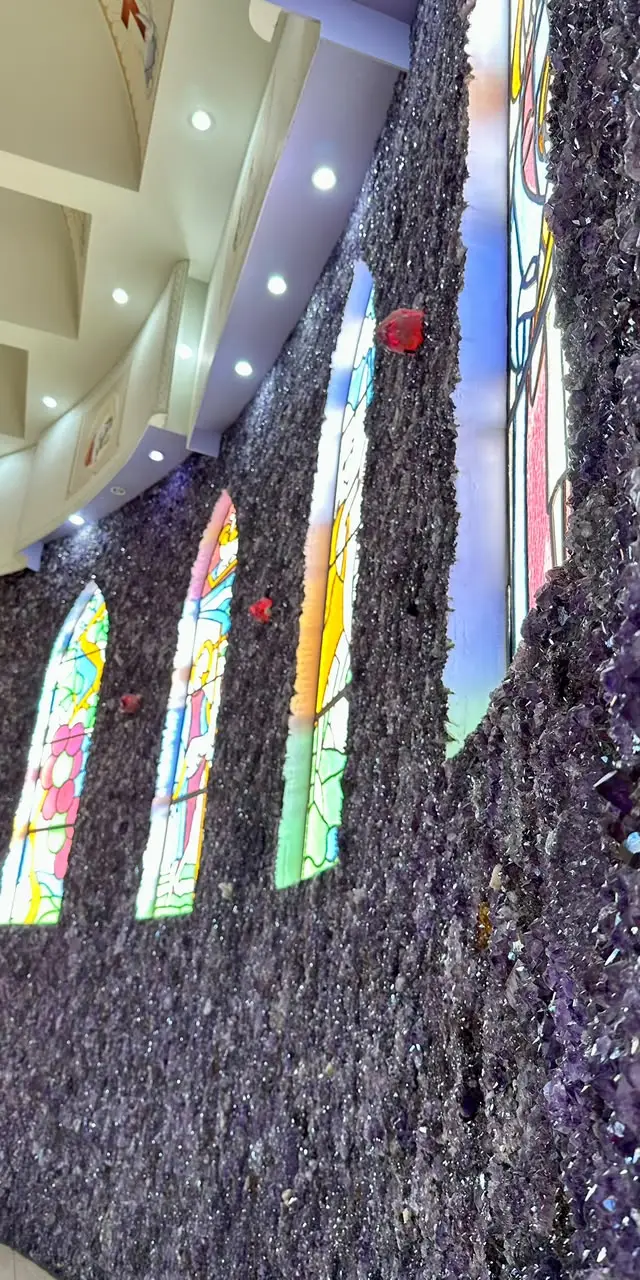
If you can keep only one image of Ametista do Sul, let it be the interior of the Igreja Matriz São Gabriel: walls, columns and altar clad in more than 40 tonnes of amethyst druses. It is presented as the only church in the world clad in precious stones, and, indeed, no other like it is known. The baptismal font is a single 500-kilogram geode. The current church was inaugurated in 2008, and next to it there is a panoramic tower with a lift, with views over the town and the neighbouring municipalities.
A curiosity about the name: the settlement was called São Gabriel when it was born, in the mid-20th century, and it changed its name precisely because Rio Grande do Sul already had a town called São Gabriel. The church kept the name, and the town became Ametista do Sul.
Working mines: where the stone is born
Ametista do Sul is one of the few places where you can visit a working amethyst mine. At the active mining site, visitors enter the galleries dug into the basalt wearing a helmet, travel through tunnels in an adapted vehicle and watch a demonstration of rock drilling and blasting, the same work that has been revealing druses since the peak of mining in 1972. The tour is accessible and flat, comfortable for our audience.
That is how the town began: the first amethysts appeared between the 1930s and 1940s, in roots and streams on the farmland of Italian settlers. The mining district grew and, together with the neighbouring Artigas department (Uruguay), formed the largest amethyst province in the world, so much so that amethyst became the symbolic mineral of Rio Grande do Sul.
Museums of giant stones
Two essential stops for anyone who likes scale:
- Museu Subterrâneo de Minerais Gigantes: a helmeted visit through openings of a former mine, with druses and crystals of a size you only believe when you see them.
- Ametista Parque Museu: more than 2,000 mineral specimens, presented as the largest collection in Latin America. The ticket includes a ride on a motorised cart inside the mine.
In the central square there is also the Pirâmide Esotérica de Energização, a structure with an interior clad in amethyst, open to visitors: stone that has become part of the heritage of the urban landscape.
Underground winery and restaurant in the mine
Two experiences that only Ametista do Sul offers:
- Vinícola Ametista: a family winery that ages its wines in galleries of about 300 metres dug into the basalt, in a former mine. The visit ends with a tasting, included in the expedition itinerary.
- Restaurante Subterrâneo Belvedere Mina: lunch served inside a disused mine, in a stone-themed setting. It is the closing lunch of our trip.
Buying amethyst at the source
At the Shopping das Pedras, a gallery with more than 20 shops, and at the stalls of the mines themselves, the druse comes straight from the source, without intermediaries, from a pocket-sized souvenir to a cathedral piece weighing tens of kilograms. It is worth measuring the space in your suitcase before leaving home.
And also: the Salto do Yucumã on the first morning
The expedition begins in Derrubadas, in the Parque Estadual do Turvo, with a vehicle safari to the viewpoints of the Salto do Yucumã, the longest longitudinal waterfall in the world, about 1,800 metres long along the Rio Uruguai. Then come two full days in Ametista do Sul. The full itinerary is on the expedition page.
When to go to Ametista do Sul
The town can be visited all year round: mines, museums and church do not depend on the weather. Late spring brings warm days and the dry spell that leaves the Yucumã in its classic form, with the river low. For group trips, November is a sound window.
Frequently asked questions
Where is Ametista do Sul?
In the north-west of Rio Grande do Sul, in the Frederico Westphalen region, about 450 kilometres from Porto Alegre and 90 from Chapecó (SC). It has 7,650 inhabitants (IBGE, 2022 Census, SIDRA table 4709).
How many days should I stay?
Two to three days is enough to see it calmly: one for the waterfall and its surroundings, two for the church, mines, museums and winery. This is the format of our November expedition.
What is the world capital of amethyst?
It is the title of Ametista do Sul: together with Artigas (Uruguay), the region forms the largest amethyst province in the world, in the same basalt flow.
Are the mine visits tiring?
No. The tours take place in adapted vehicles and flat galleries, with helmets and drivers. The group itinerary respects the 60+ pace.
Do I need to buy tickets in advance?
Travelling with us, no: the tickets for the itinerary's stops are already included in the expedition package.
The November expedition already has a date
November 2026: Ametista do Sul and Derrubadas: departure from Porto Alegre on 27 November, three days in a leito (fully reclining sleeper) coach, accommodation with breakfast, guide and CADASTUR agent from boarding to return. Book via WhatsApp and see all the details at /expedicao/novembro-2026-ametista-do-sul-e-derrubadas.
The world is waiting for you. We take care of the rest.