Ouro Preto is a historic city in Minas Gerais, the former provincial capital and birthplace of the sculptor Aleijadinho. It brings together Baroque churches, museums and cobbled streets in a compact historic centre, which makes it possible to see its main sights in a single day on a Mundo a Passeio caravan departing from Porto Alegre.
Where is Ouro Preto and why is it historic?
Ouro Preto is in the central region of Minas Gerais. It was founded in the late seventeenth century, at the height of the gold cycle in colonial Brazil, when the region drew a large flow of Portuguese settlers and enslaved Africans to work in mining. The city remained the capital of the province of Minas Gerais until the end of the nineteenth century, when the administrative seat was moved to Belo Horizonte, a city planned and built specifically for that purpose.
The city preserves one of the most complete colonial architectural ensembles in the country and was the first Brazilian city to be declared a World Heritage Site by UNESCO, in 1980, a recognition that helped consolidate its preservation over the following decades.
Which churches should you visit in Ouro Preto?
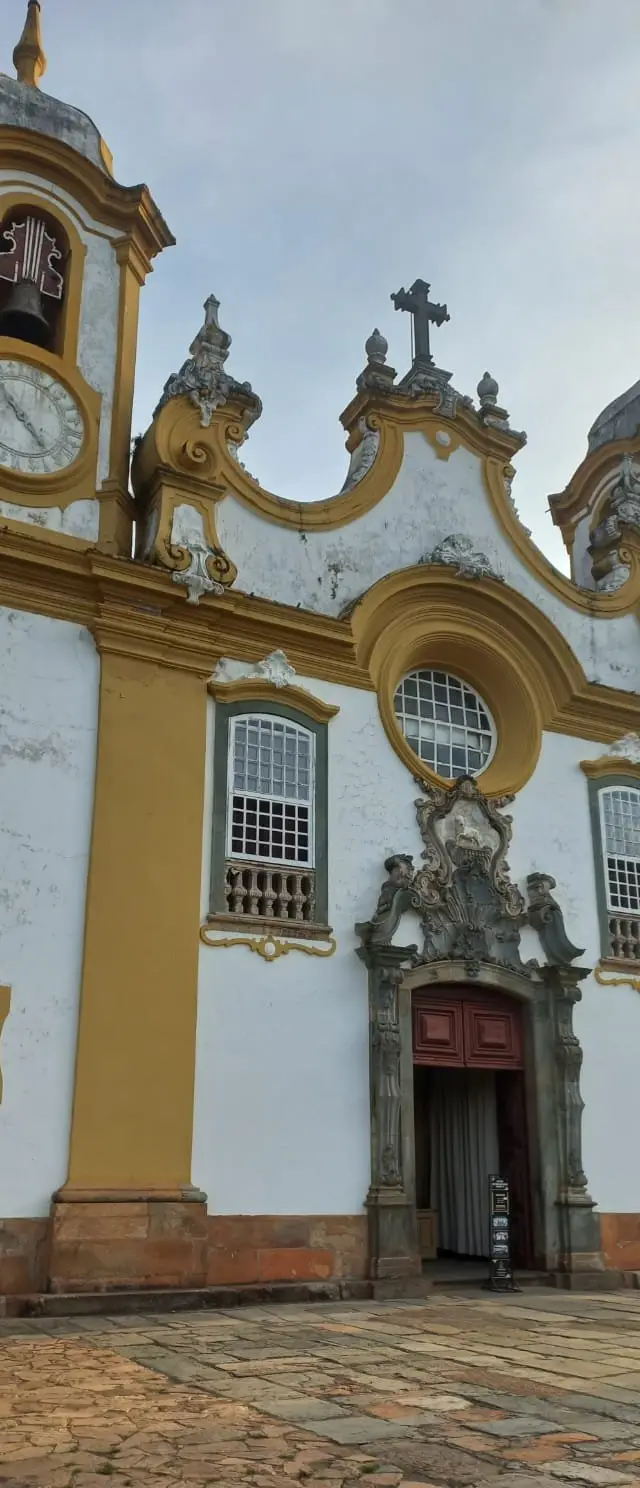
Among the most visited churches in Ouro Preto are the Igreja de São Francisco de Assis, with a façade and carving attributed to Aleijadinho, the Igreja Nossa Senhora do Pilar, with an interior covered in gold, and the Igreja Nossa Senhora do Carmo, also linked to the artistic output of the colonial period in Minas Gerais. Each one offers examples of the work of artists from the colonial period in Minas Gerais, with differences in style that reflect the various phases of Baroque art in the region.
Each church usually has its own visiting hours, which are worth confirming on site before planning the day's itinerary, since some churches close for religious activities at certain times.
What is there to see besides the churches in one day in Ouro Preto?
Besides the churches, one day in Ouro Preto allows you to see the Praça Tiradentes, the historic centre of the city, the Museu da Inconfidência, housed in the former Casa de Câmara e Cadeia, and the Casa dos Contos, which recalls the fiscal administration of gold in the colonial period. The Museu da Inconfidência holds a collection related to the separatist movement of 1789, for which Ouro Preto was one of the main historical settings.
The sloping cobbled streets that characterise the city are also part of the experience of walking through the historic centre, revealing the urban landscape built around the hills that gave rise to gold mining in the region.
Is walking in Ouro Preto tiring?
Walking in Ouro Preto calls for care because the streets of the historic centre are cobbled and have steep slopes, typical of cities that grew around hills during the gold cycle. The uneven terrain is part of what makes the city's urban landscape so recognisable, but it also calls for a slower walking pace.
Closed, comfortable footwear is recommended for anyone covering the route on foot during the visit, since the difference in level between points in the historic centre can be considerable over short stretches.
How does Ouro Preto fit into a Mundo a Passeio caravan?
Ouro Preto is usually one of the destinations on cultural itineraries organised by Mundo a Passeio, departing from Porto Alegre, often combined with other historic towns in Minas Gerais such as Congonhas and Tiradentes in the same itinerary. This combination lets travellers see different examples of colonial heritage in Minas Gerais on a single trip.
The time spent in the city and the exact itinerary of each trip should be confirmed on WhatsApp, as the order of visits and the stops included may vary according to the date of the caravan.
Does Ouro Preto have a university life beyond the historic centre?
Ouro Preto is home to the Universidade Federal de Ouro Preto, created in 1969 from the merger of much older higher education schools, among them the Escola de Minas, founded in the city in 1876. This university presence gives the city a cultural life of its own, with events and activity that add to the flow of visitors drawn by the historic heritage.
This combination of historic city and university city is one of the traits that set Ouro Preto apart from other preserved colonial cities in Brazil, keeping a constant movement of people through the streets of the centre throughout the year.
Is Ouro Preto worth visiting at any time of year?
Ouro Preto receives visitors throughout the year, with a larger flow in July, the school holiday period in Brazil, and during Holy Week, when the city holds traditional religious celebrations tied to the Catholic calendar. Outside these periods, the historic centre is usually quieter, which makes it easier to visit the churches and museums at a calmer pace.
The city's altitude climate, milder than that of other regions of Minas Gerais, is also a factor for those planning the trip, since colder nights can occur even outside winter.
See also Congonhas: the Prophets of Aleijadinho, Tiradentes, MG: what to see and more itineraries at /blog.
Cover photograph: Praça Tiradentes and Museu da Inconfidência, in Ouro Preto, by Clarissa Pacheco, CC BY 2.0 licence, via Wikimedia Commons, image resized (https://commons.wikimedia.org/wiki/File:Pra%C3%A7a_Tiradentes_e_Museu_da_Inconfid%C3%AAncia%2C_Ouro_Preto.jpg).