Allan Kardec and Spiritism: the doctrine in plain language
Spiritism is a doctrine organised in France in the mid-19th century by Allan Kardec. Allan Kardec was the pen name of the French educator Hippolyte Léon Denizard Rivail, born in Lyon in 1804 and died in Paris in 1869. The doctrine presents itself as three things at once: science, philosophy and religion. This text explains, in plain language and with respect, who Kardec was, what Spiritism teaches and which are its basic books.
One note from the start: here we describe what the doctrine states, without trying to prove or disprove anything. Each person has their own belief, and our aim is to help you understand.
Who Allan Kardec was
Before Spiritism, Rivail was already a highly respected educator, the author of textbooks and a follower of Pestalozzi's teaching method. A man of science, observant and sceptical, he devoted his life to education until the age of 50, when he was invited to observe the phenomenon of the "turning tables" (mesas girantes): tables that moved by themselves and seemed to answer questions in Parisian salons.
When he investigated these phenomena with the rigour of a teacher and researcher, he adopted the name Allan Kardec (a name which, as was revealed to him, he had borne in a past incarnation as a druid). Kardec noticed that the answers given through the phenomena showed an intelligence and a morality that could not come from the tables themselves, and he began to study the communications said to come from disincarnate spirits.
Kardec's role was that of codifier. Instead of inventing a doctrine, he gathered, organised and systematised messages attributed to higher spirits and received by several mediums of his time, seeking to give all of it a logical order. This is why we speak of the Spiritist codification.
What Spiritism is
Spiritism, also called the Spiritist doctrine or Kardecism, is a spiritualist and reincarnationist doctrine. Spiritualist because it affirms the existence of the spirit before, during and after physical life, and reincarnationist because it teaches that the spirit returns to life in new bodies over time.
The doctrine presents itself with what is called the tripod: science, philosophy and religion. Science investigates the phenomena, philosophy raises questions about where we come from and where we are going, and religion focuses on the moral consequences, guided by the teachings of Jesus. A word of caution applies here: this tripod is how Spiritism describes itself, and not a seal of approval given by mainstream science. Communication with spirits is treated as part of a belief, with deep respect.
The five basic works of the codification
The foundation of Spiritism lies in five books written by Allan Kardec, known as the codification:
- O Livro dos Espíritos (The Spirits' Book, 1857), which presents the general principles of the doctrine through questions and answers.
- O Livro dos Médiuns (The Mediums' Book, 1861), on mediumship and the practical aspects of communication with spirits.
- O Evangelho Segundo o Espiritismo (The Gospel According to Spiritism, 1864), covering the moral side, based on the teachings of Jesus and on charity.
- O Céu e o Inferno (Heaven and Hell, 1865), on divine justice and the destiny of the spirit after the death of the body.
- A Gênese (Genesis, 1868), on the origin of things, miracles and predictions in the light of the doctrine.
The first of them, O Livro dos Espíritos, was published on 18 April 1857 and is considered the starting point of Spiritism in the world.
What the doctrine teaches
Among the central principles that Spiritism teaches are:
- the existence of God, as the supreme intelligence and primary cause of all things;
- the immortality of the spirit;
- reincarnation, that is, the return of the spirit to new lives in order to keep evolving;
- the communicability of spirits (communication between the living and the disincarnate), through mediumship;
- the plurality of inhabited worlds in the universe;
- the law of cause and effect, in which every action has a consequence;
- the continuous evolution of all towards moral and intellectual improvement;
- the maxim "Outside charity there is no salvation", which places love of one's neighbour at the foundation of moral life.
All of this is the teaching of the doctrine, and not a statement of material science. We describe it to help you understand the culture and the foundation of a belief so present in Brazil.
Caminhos de Luz: Triângulo Mineiro and Caldas Novas
Much of what made Spiritism known in Brazil has a strong connection with the Triângulo Mineiro, the setting of key moments for the doctrine in the country. Getting to know these places in person brings an inexplicable peace and helps you better understand the history of dedication of these figures. It is a true journey of self-knowledge, culture and deep emotion.
Many travellers who follow this route with us say the experience is a turning point: the welcome, the words of comfort and the energy of the places visited bring spiritual renewal, deep answers and an indescribable sense of peace, whatever each person's religion.
If you have felt the call in your heart to live moments of reflection, learning and spiritual connection, our November Expedition: Triângulo Mineiro and the Waters of Caldas Novas (from 10 to 18 November 2026) is the perfect itinerary.
During this trip, we will experience essential and deeply moving landmarks:
Sacramento/MG: The Cradle of Spiritist Education
Our stop in Sacramento takes us to the iconic Colégio Allan Kardec. Founded by Eurípedes Barsanulfo in the early 20th century, it was the first school in Brazil to adopt Spiritist teaching and pedagogical methods that were innovative for the time, abolishing physical punishment and bringing boys' and girls' classes together. There, we will have a special and moving meeting with Alzira Amui, Eurípedes's great-niece. Still in Sacramento, we will visit the majestic Gruta dos Palhares, one of the most beautiful natural sites in the region, perfect for contemplation.
Conquista/MG: Connection and Messages
In Conquista, we will experience a moment of strong spiritual intensity: we will take part in a mediumistic meeting at the local centre, which will include passes (transmission of positive energy), inspiring talks and sessions of psychographies (letters dictated by spirits to mediums), bringing great comfort to those present.
Uberaba/MG: The Legacy of Love of Chico Xavier
Uberaba is an essential stop for understanding the essence of charity. It is a deep immersion in the legacy of the most beloved medium in Brazil, Chico Xavier. We will visit the Casa da Sopa, one of his best-known charitable projects, where we will receive the healing passe on stretchers. We will also see the Casa de Memórias e Lembranças and the Memorial Chico Xavier, where his humble story and personal belongings connect us with his greatness. We will also take part in Gospel meetings and mediumistic work with readings of psychographies.
Caldas Novas/GO: The Body Asks for Rest
So much spiritual elevation and processing of emotions call for a moment of rest and physical care. And to close on a high note, we will spend 2 nights at the Hotel Morada das Águas in Caldas Novas. With meals included, you can rest, enjoy the hotel's facilities and renew your energy in the region's famous thermal waters before the return.
The expedition departs from Porto Alegre (Haud Park car park) at 9am on 10 November, in a double-decker leito total (full sleeper) coach with satellite internet. A Guatambu guide and travel agent will accompany every detail so that you do not have to worry about anything.
Frequently asked questions
Who was Allan Kardec?
He was the French educator Hippolyte Léon Denizard Rivail (1804 to 1869), who organised and systematised Spiritism after investigating the phenomenon of the turning tables. He is called the codifier because he gave a logical structure to the teachings.
Is Spiritism a religion?
The doctrine presents itself with three faces: science, philosophy and religion. Many live it purely as a religion and a path of inner reform, while others study it as a philosophy of life.
What are the basic works?
There are five: O Livro dos Espíritos, O Livro dos Médiuns, O Evangelho Segundo o Espiritismo, O Céu e o Inferno and A Gênese.
What is mediumship?
According to the doctrine, it is the capacity human beings have to serve as a bridge in communication between incarnate people and disincarnate spirits.
Do I need to be a Spiritist to take the trip on the Spiritist route?
No. The trip is open to everyone, with full respect for each belief. It is a trip focused on culture, on the history of love of one's neighbour and on wellness and renewal tourism.
Knowing the doctrine makes the trip much richer. Join our November group through the Triângulo Mineiro and Caldas Novas. Message us on WhatsApp to secure your place (places are limited!). The world is waiting for you. We take care of the rest!
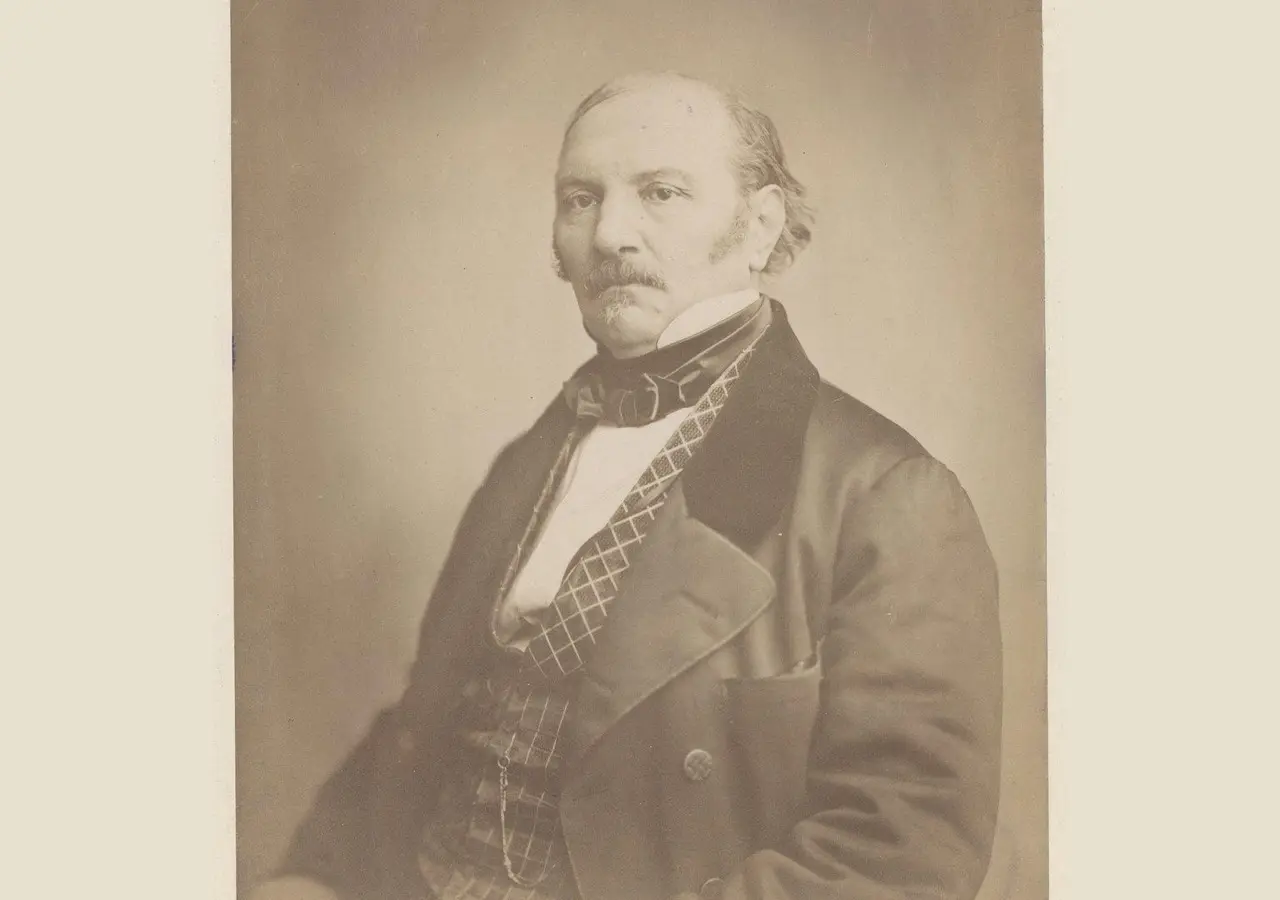
Cover image: portrait of Allan Kardec (public domain), via Wikimedia Commons.