
Imagine stepping out of the car on a corner in Buenos Aires and, before anything else, catching the warm aroma of freshly brewed coffee drifting from a century-old café, while further along a couple begins to dance tango in the open air as if time had stopped just for you to watch. This is how the city welcomes you: with open arms, music in the air and a quiet invitation to slow down. The capital of Argentina and one of the most European metropolises in South America, it brings together wide avenues, elegant architecture, bohemian corners and a human warmth you notice from the first sip of the morning. And for those travelling in their later years, it is a gift: comfortable, flat across much of the centre, with wide pavements and a cultural life that fits calm, unhurried steps.
In the lines that follow, you will dive into porteño culture, find out what to expect from the city and its tastiest curiosities, and take home a practical guide at the end, covering money, charges and tips, so that you arrive more confident and enjoy it without surprises. Prepare your soul (and your appetite): the adventure starts now.
Porteño culture: tango, coffee and a generous table
To speak of Buenos Aires is, above all, to speak of tango. Born on the banks of the River Plate in the late 19th century, tango is dance, it is music and, above all, it is feeling, the kind that runs up your spine when the bandoneón sounds its first plaintive note. In San Telmo, the oldest neighbourhood in the city, it pulses through the cobbled streets, the show venues and the milongas, those halls where porteños of all ages dance close together to the sound of an orchestra, eyes closed, perfectly happy. Watching a tango show with dinner is one of the memories you will keep for ever, but there is also a simpler pleasure, just as magical: sitting on a bench in a square, feeling the breeze and watching the dancers whirl in the open air, as if the whole city were a stage.
And what a delightful city for anyone who loves a good café table. Buenos Aires is the capital of the cafés notables, century-old establishments protected for their historical value, true treasures from another era. The most famous is Café Tortoni, opened in 1858 on Avenida de Mayo, with colourful stained glass, cool marble tables under your hands and a scent of hot chocolate that seems to float in the air. Sitting there for a coffee with medialunas (the Argentine croissants, golden and lightly sweet) or a hot chocolate with churros is to step quietly into a time machine, and not want to come back. The pastry shops crown the city's sweet chapter with the ever-present, irresistible doce de leite (milk caramel), which appears, generously, in alfajores, tarts and desserts that make anyone sigh.
At the table, though, the great star is meat. The parrilla (steakhouse) and the sacred ritual of the asado are part of the national identity: generous cuts, grilled with the patience of someone who has all the time in the world, perfuming the whole street with that mouth-watering smoke, and served with the greatest simplicity. Another heart-warming custom is mate, the herb drunk from a gourd with a straw, passed from hand to hand among friends and family in a circle of conversation. More than a drink, mate is an embrace, a gesture that says "you are welcome here".
Fileteado and the art of the streets
One detail that delights the eye is the fileteado porteño, a decorative art of curving lines, flowers and ornamented lettering that began humbly on lorry bodies and today colours signs, façades and buses with its festive elegance. Recognised as cultural heritage, it is the city's visual signature, and it has its charm: once you learn to notice it, you see it everywhere, like a beautiful secret the city tells you little by little.
Which neighbourhoods should you visit in Buenos Aires?
Buenos Aires, the capital of Argentina, has neighbourhoods with very distinct personalities, from elegant Recoleta to colourful La Boca, and each one makes you want to know it better.
- Recoleta: elegant and tree-lined, it is home to the celebrated Recoleta Cemetery, a surprising open-air museum of mausoleums sculpted like small palaces, where Eva Perón, Evita, rests. Nearby, sophisticated cafés and gardens invite a charming pause.
- San Telmo: besides the tango that echoes everywhere, it is famous for its Sunday antiques fair, which takes over Plaza Dorrego and the neighbouring streets with second-hand stalls full of stories, crafts and musicians scattered on every corner.
- La Boca: a port neighbourhood, explosively colourful, home to the Caminito alley, with its little tin houses painted in vibrant colours, street artists dancing and a passion for football in the air.
- Palermo: the most bohemian and gastronomic, with wide parks, flowering gardens and a restaurant scene for every taste and hour.
- Puerto Madero: the modern, airy face of the city, with revitalised docks, waterside walkways and a delightful calm, perfect for a gentle walk at dusk.
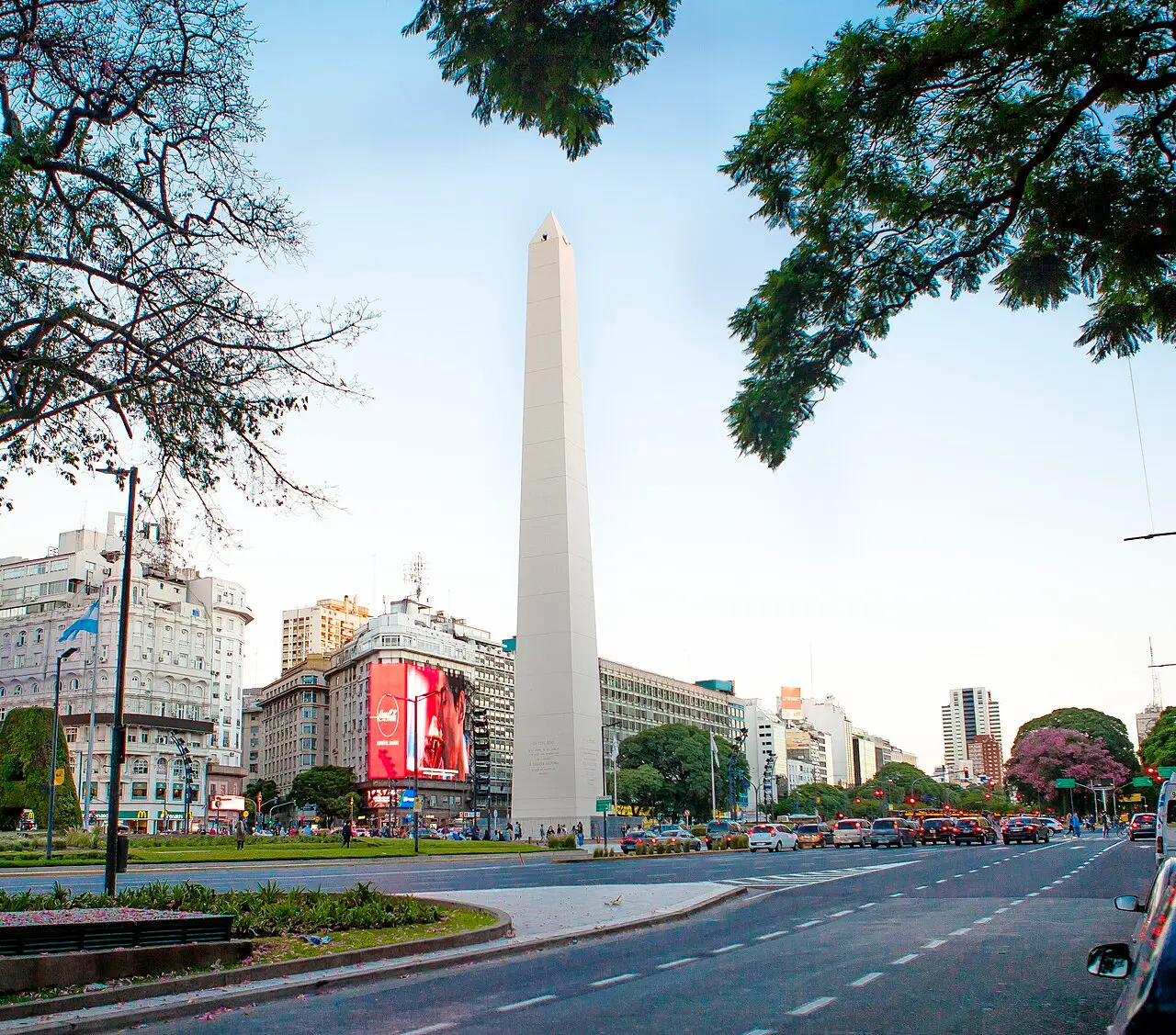
At the heart of it all, imposing, stands the Obelisco, planted in the middle of the vast Avenida 9 de Julio, one of the widest in the world. A few steps away, two cultural icons worth the journey on their own: the Teatro Colón, one of the most revered opera houses on the planet, with breathtaking acoustics, and the El Ateneo Grand Splendid bookshop, set in a former theatre and considered one of the most beautiful in existence, with its preserved boxes, painted ceilings and the stage turned into a café where you read and dream. Walking in, you understand why they say this city breathes poetry.
What to expect from the city
Expect a European, bohemian air, with Parisian-inspired buildings, bookshops peeking out on every corner and a special taste for conversation that has no time to end. And expect a detail that makes visitors smile: here people dine late, very late. It is common for restaurants to fill up only after 9 pm, so do not be surprised to find empty tables earlier. Nobody is closed, it is simply the city living by its own clock. The tip is to join in this rhythm: stretch out the afternoon with a coffee, rest your feet and arrive for dinner when the porteños do, hungry and ready for good conversation.
Portuguese tends to get you by, but it is worth knowing that the language is Rioplatense Castilian, with that irresistible musical accent, the use of vos instead of tú and the famous che for calling someone with familiarity and affection. A "buenas" said with a smile already takes you halfway, and porteño friendliness does the rest.
Practical guide: currency, cubierto and tips
This is the part that raises the most questions, so let us take it calmly and clearly, so that you travel at ease and well informed.
What currency is used in Buenos Aires?
The currency used in Buenos Aires, the capital of Argentina, is the Argentine peso, and the country has long lived with high inflation, which makes prices change often. So avoid memorising figures: always confirm on the spot, without hurry.
One important point to understand: there is a difference between the official exchange rate and a parallel rate, popularly called the "dólar blue", generally more favourable for those who bring dollars in cash. Many people take dollars in physical notes in good condition (no tears or marks) to exchange in the city. If you choose this, make the exchange with care and in trustworthy places, preferably recommended by the guide, and never on the street with strangers. International cards work and are practical for hotels and shops, but they usually use the official rate. Always keep some cash at hand for cafés, fairs, taxis and tips.
In short: take new, well-kept dollars, exchange them safely, use a card for larger purchases and keep small change in your pocket for everyday needs.
What is the cubierto in a Buenos Aires restaurant?
The cubierto is a line that appears on the bill in restaurants in Buenos Aires, the capital of Argentina. It is a charge per person for table service, bread and cutlery. It is normal and legal in Argentina, it is not a mistake or a trap, and it is added to the price of the dishes. Knowing this beforehand avoids the surprise and makes the meal even more enjoyable.
How does tipping (propina) work in Buenos Aires?
In Buenos Aires, the capital of Argentina, the tip, or propina, is generally not included in the bill. The custom is to leave around 10% for good service, preferably in cash, handed directly to the waiter. It is a kind gesture, appreciated and very easy to make when you have small change at hand.
For the traveller
A few tips offered with care for those who enjoy the city at a calm pace:
- Gentle walks: the centre, Recoleta, Puerto Madero and Palermo are flat and pleasant on foot; take breaks in the cafés, which are not an interruption of the outing, they are part of it.
- Basic safety: as in any large city, watch your bags and phones in crowded places, such as the San Telmo fair, and prefer taxis or transport arranged by the guide.
- What to try: an asado at a good parrilla, a coffee with medialunas at the Tortoni, an alfajor with doce de leite that melts in the mouth, a craft ice cream (the city is wildly in love with ice cream) and, if the chance arises, accepting the mate offered by a local, which is both an honour and a joy.
- Clothing and pace: bring a light jacket for cool evenings and do not try to embrace the whole city in a single day; the charm of Buenos Aires lies in savouring it slowly, sip by sip.
Travelling in good company
Buenos Aires opens up entirely, with all its soul, when someone knows its paths: where to exchange money safely, what time to arrive at the tango show, which table to ask for in the historic café and how to cross 9 de Julio calmly and with a smile on your face. That is exactly the comfort of discovering the Argentine capital in a guided group, with transport, itinerary and logistics taken care of, leaving you free for what really matters: looking, tasting, dancing with your eyes and being enchanted at every corner. Discover our expeditions and come and experience the porteño soul in good company, the way it deserves to be experienced.
Cover image: CC-BY-2.0 (author: Leonardo Samrani), via Wikimedia Commons (https://commons.wikimedia.org/wiki/File:Avenida_9_de_Julio,_Buenos_Aires_(40089810910).jpg).


