Imagine a region of Minas Gerais where faith does not shout: it is lived in the silence of prayer houses, in a bowl of soup served to a stranger, in the patient queue of someone who has travelled a long way just to hear a word of comfort. It is in these small, everyday gestures that the Triângulo Mineiro, the corner in the west of the state that embraces Uberaba, Uberlândia and Sacramento, became one of the brightest reference points of Spiritism in Brazil. And it was no accident. People lived, worked and loved there who helped shape the doctrine across the whole country. To understand why this land became a Spiritist cradle is, at bottom, to understand a little of the Minas soul itself: religious, hospitable and always turned towards others.
What is Spiritism and where did it begin?
Spiritism is a doctrine codified in France in the mid-19th century by Hippolyte Léon Denizard Rivail, under the pseudonym Allan Kardec. The story begins on the other side of the ocean. Spiritism was codified in France in the mid-19th century by an educator named Hippolyte Léon Denizard Rivail, a man of reason and method, who adopted the pseudonym Allan Kardec. The work that marks the birth of the doctrine is The Spirits' Book (O Livro dos Espíritos), published on 18 April 1857. In the following years, Kardec organised the other works of the so-called Kardecian Pentateuch, among them The Mediums' Book (O Livro dos Médiuns, 1861) and The Gospel According to Spiritism (O Evangelho segundo o Espiritismo, 1864), bringing together principles that would touch millions of hearts: reincarnation, communication between those who have passed on and those who remain, the immortality of the soul and, above all, charity as a path of evolution.
What makes Spiritism so distinctive is its boldness in presenting itself at once as philosophy, science and religion, a faith that does not ask you to switch off your reason, but to walk hand in hand with it. It was precisely this combination, of an open heart and an awake mind, that found fertile ground when the doctrine crossed the Atlantic and reached Brazil.
How did Spiritism arrive in Brazil?
Allan Kardec's ideas reached Brazil in the 19th century and found in the country the largest Spiritist population in the world. Kardec's ideas landed on Brazilian soil still in the 19th century, first among doctors, lawyers and intellectuals in the coastal cities, curious people who read in French and were charmed by the proposal. The movement organised itself slowly, with patience, until in 1884 the Federação Espírita Brasileira (FEB) was born in Rio de Janeiro, going on to become the main national body of the doctrine.
What almost no one imagined, in those first discreet gatherings, is that Spiritism would gain such a presence in Brazil. The 2010 IBGE Census counted 3,848,876 people who declared themselves Spiritists, about 2.0% of the resident population. Here, Spiritism took on a face of its own, deeply Brazilian: the emphasis on charity, care that is always free of charge, the generosity of the psychographed books that travelled the country from hand to hand. It was as if the doctrine had found its home among these people.
Why did Spiritism flourish in the Triângulo Mineiro?
The Triângulo Mineiro, in Minas Gerais, is a reference point for Spiritism in Brazil because of Eurípedes Barsanulfo, in Sacramento, and Chico Xavier, in Uberaba. If Brazil is the Spiritist heart of the world, the Triângulo Mineiro is one of its strongest beats. And the explanation has a name, in fact two names, of people who lived, taught and served on that ground, becoming beloved reference figures both within and beyond the country.
The first is Eurípedes Barsanulfo (1880-1918), born in Sacramento, right there in the Triângulo. A teacher, journalist and medium, he was one of those men who seem to live quickly because they have so much to give. In 1907, in his own home town, he founded the Colégio Allan Kardec, recognised as the first Spiritist school in the world. There, inside the classrooms, academic teaching went hand in hand with a moral education inspired by Kardecian principles, and care for the poor was not a detail: it was the centre. Eurípedes passed away young, in 1918, while tending victims of the Spanish flu, giving his own life in the most Spiritist gesture of all, that of serving to the end. And he left in Sacramento a landmark that has never faded.
The second, and perhaps the most beloved of all, is Chico Xavier (Francisco Cândido Xavier, 1910-2002). Born in Pedro Leopoldo, also in Minas Gerais, he moved to Uberaba in 1959, where he would live until his last day. It was in Uberaba that his work reached a reach nobody had foreseen, turning the city into what so many people, with affection, came to call the "Spiritist capital of Brazil". Chico is credited with psychographing more than four hundred books, among them the unforgettable Nosso Lar, and, more than that, with a whole lifetime of outstretched hands, devoted to charity and to the consolation of grieving families. Those who sought him out rarely left unchanged.
Charity, always at the centre of everything
An invisible thread stitches all these stories together, and it has a name: charity. The phrase attributed to Kardec, "without charity there is no salvation", became almost an oath of Brazilian Spiritism, and nowhere is it made so tangible, so flesh and blood, as in the Triângulo Mineiro.
In Uberaba, Chico Xavier's work was never separate from social assistance: food handed out, clothes given, people in need welcomed without questions. In Sacramento, the work of Eurípedes Barsanulfo was born bound to the care of the sick and the poorest, as if faith and care were the same thing, and perhaps they are. All of this speaks, in a very deep way, to the rural Minas culture, in which welcoming the stranger and reaching out to a neighbour are not rare virtues: they are daily bread.
How the Minas soul helped to root the doctrine
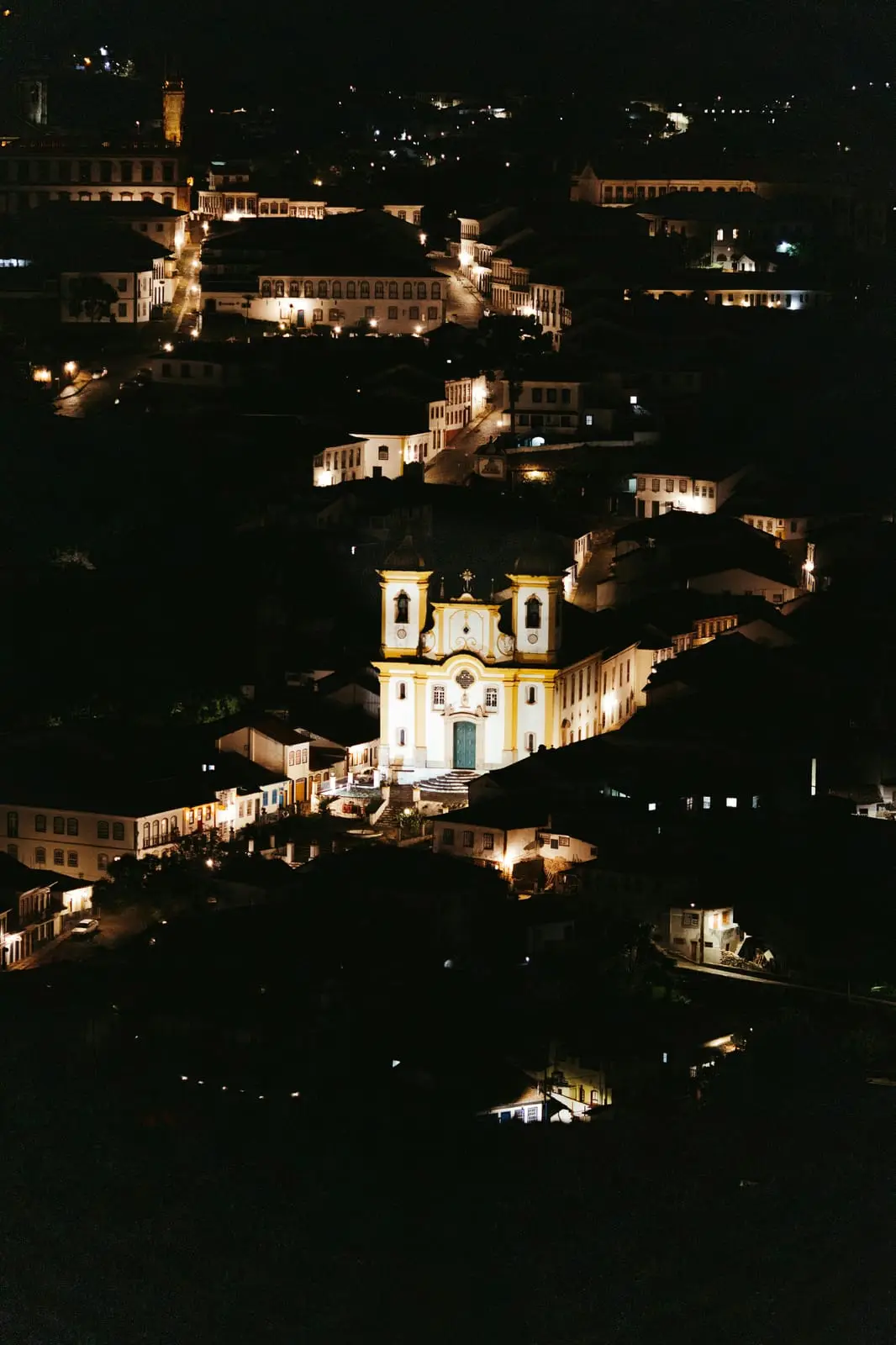
It was no accident that Spiritism flourished precisely in Minas. Minas religiosity is old and intense, inherited from the gold era, from Baroque churches with gilded façades and from the Catholic traditions that shaped every town. On this soil, already so fertile in faith, the Spiritist proposal, of a reasoned belief, turned towards inner transformation and charity, found attentive ears and willing hearts. It was a seed that fell on good ground.
Life in the interior did the rest. In the smaller towns of the Triângulo, where everyone knows each other and hospitality is almost an instinct, Spiritist centres became places of meeting, support and belonging. Chico Xavier's fame, over the decades, drew crowds to Uberaba, people from every corner of the country, often wounded by grief, seeking a single word of comfort. And the city learned to receive this human river with the same quiet serenity with which it receives any visitor who knocks at the door. Welcoming became a vocation.
What to visit in the Spiritist Triângulo Mineiro
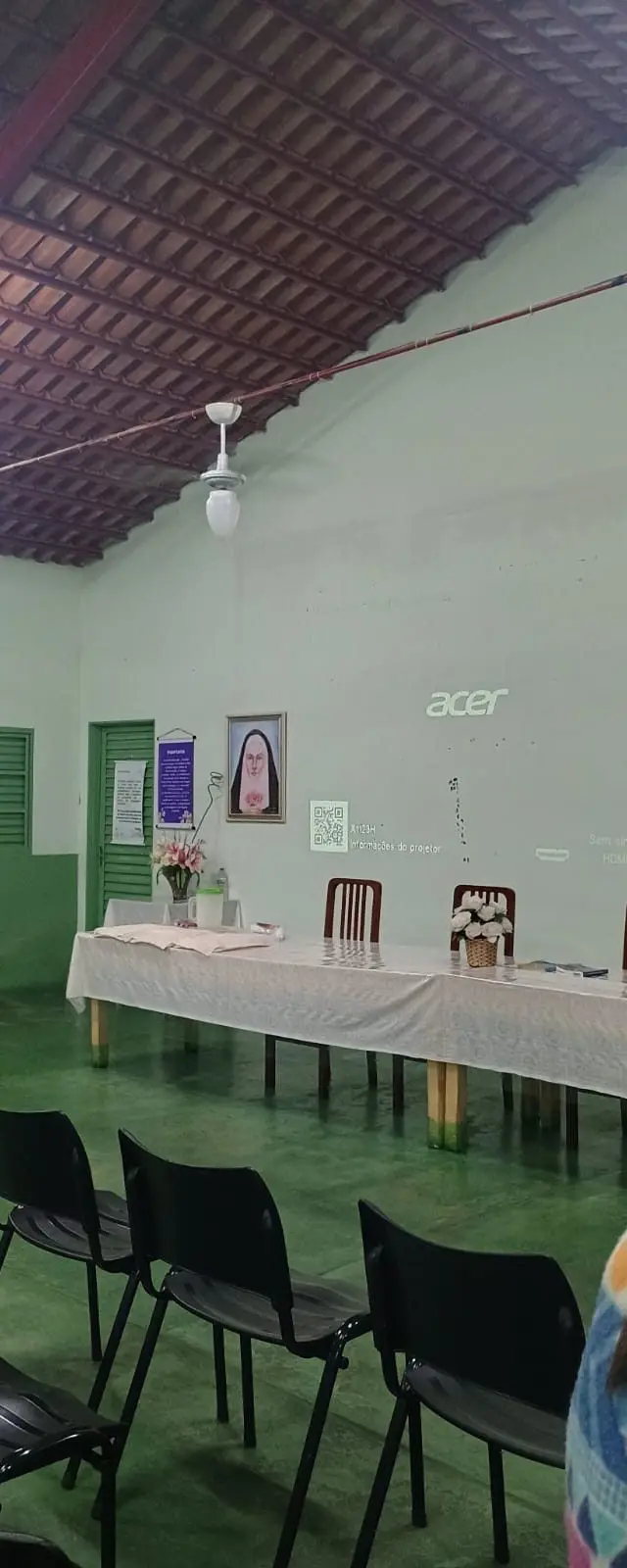
In Uberaba, the route takes in the Memorial Chico Xavier and the Grupo Espírita da Prece; in Sacramento, the spaces linked to Eurípedes Barsanulfo and the Colégio Allan Kardec. All of this legacy turned the Triângulo Mineiro into a beloved destination for religious and Spiritist tourism. In Uberaba, visitors find the Memorial Chico Xavier, the house where the medium received people for hours on end, the Grupo Espírita da Prece and various centres and institutions that keep his memory and his assistance work alive. In Sacramento, it is possible to visit the spaces linked to Eurípedes Barsanulfo and the Colégio Allan Kardec, on a more secluded, almost confidential route, where history whispers from every wall.
It is tourism of a different nature, less about imposing monuments and dazzling photographs, and more about presence, memory and faith. Those who go usually seek stillness and reflection, a time alone with their own thoughts. And the region offers exactly that, with Minas hospitality always there, like a background embrace you feel without needing to name it.
For you, the traveller
If you dream of getting to know the Triângulo Mineiro through a Spiritist lens, it is worth keeping a few simple guidelines in your heart:
- Respect the setting. Centres, houses and memorials are places of faith and work, visited by people at very delicate moments. Speak quietly, observe opening hours and follow local guidance with courtesy.
- Confirm days and times. Many institutions have their own schedule for assistance and visits; planning ahead avoids disappointment and respects the time of those who work there.
- Allow plenty of time. Uberaba and Sacramento call for an unhurried pace. This is not a route for rushing, but for contemplation: let the clock rest.
- Be careful with photos. In some places, photography may not be permitted. Always ask first, politely.
- Bring an open curiosity. You do not need to be a Spiritist to visit. The region welcomes with open arms those who arrive with respect and a sincere wish to learn.
More than a day out, a route through the Triângulo Mineiro is a silent invitation to look inwards, at the faith that sustains us, the memory that forms us and the immense value of doing good without expecting anything in return.
The beauty of walking in company
Places like these take on an entirely new dimension when visited in good company. Travelling on a guided expedition means exploring Uberaba and Sacramento alongside someone who knows the opening times, the behind-the-scenes details and the stories of each place, and, even more beautiful, it means sharing every impression and every emotion with fellow travellers who seek the same stillness as you. For older travellers, there is also the generous comfort of not worrying about logistics, roads or planning: everything is already taken care of, and the sweetest part is left to you, which is simply being present.
On our expeditions in the region, the faith route through the Triângulo Mineiro is lived at the right pace, with respect for the meaning of each place and the attentive company of those travelling beside you. Because there are journeys that take us to new landscapes, and there are journeys that, above all, take us back inside ourselves. This is one of them.
- IBGE, SIDRA, table 137 (resident population by religion, 2010 Census): https://sidra.ibge.gov.br/tabela/137 (accessed 17 October 2026).