Walking through Ouro Preto and Congonhas is much more than visiting old monuments: it means stepping into the beating heart of eighteenth-century Brazil. Here, where gold sprang from the depths of the earth and the ideals of liberty of the Inconfidência Mineira (the Minas Conspiracy) echoed across the mountains, one of the most brilliant and original artistic movements on the continent was born: Minas Baroque.
Both towns proudly hold UNESCO World Heritage status and attract travellers from around the world. On Guatambu Travel expeditions departing from Porto Alegre, this historic route is experienced in depth, with respect for each person's walking pace and the warm welcome that only Minas knows how to offer.
Ouro Preto: an open-air museum among the hills
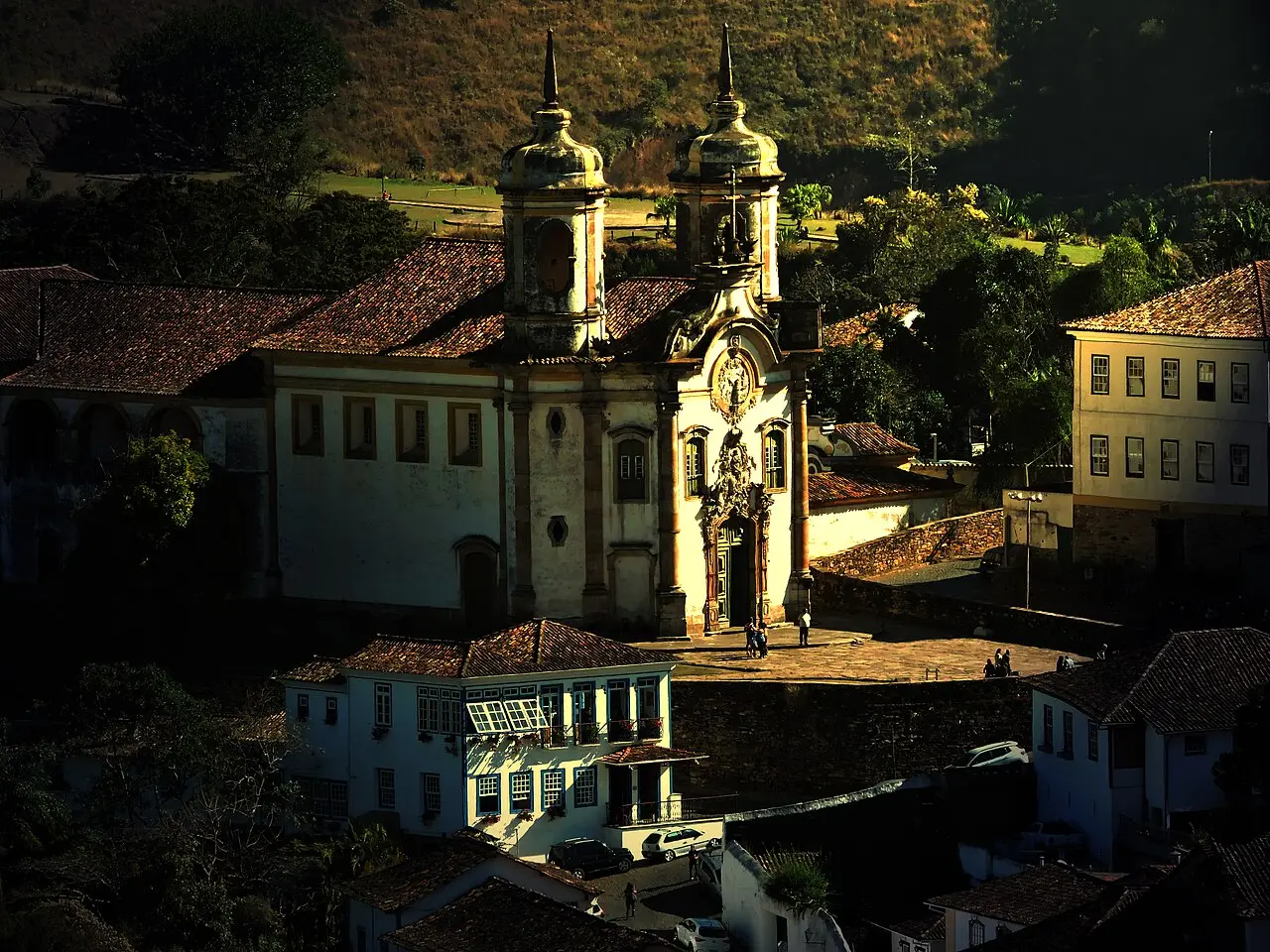
Formerly Vila Rica, Ouro Preto preserves the largest Baroque colonial architectural ensemble in the country. Every bend in its cobbled streets reveals elegant colonial façades, centuries-old fountains and bell towers whose chimes call visitors to contemplation.
The highlights of our visit include:
- Igreja de São Francisco de Assis: One of the greatest works of Antônio Francisco Lisboa, known as Aleijadinho, who designed the façade, the soapstone-carved pulpits and the main altar. The ceiling, painted in perspective by Mestre Ataíde, depicts the Assumption of Our Lady in soft tones of blue and gold, conveying an inexplicable peace.
- Igreja Matriz de Nossa Senhora do Pilar: Famous for the splendour of its gilded woodcarving, covered with hundreds of kilos of gold dust, which shows the opulence of the gold cycle.
- Praça Tiradentes and Museu da Inconfidência: The nerve centre of the nation's civic history, housing the former governors' palace and honouring the memory of the conspirators.
Congonhas and the genius of the Twelve Prophets
About an hour from Ouro Preto, on top of a hill with a stunning view of the Serra do Espinhaço, stands the Santuário do Bom Jesus de Matosinhos, in Congonhas.
Climbing the ramp to the basilica's churchyard and coming face to face with the twelve monumental statues of the biblical prophets, carved by Aleijadinho in soapstone in the early nineteenth century, is a moment that gives you goosebumps. The movement of the robes, the expressive features and the dramatic gesture of each prophet show the strength and spirituality of a brilliant artist who, despite serious physical limitations, left an eternal mark on world art.
In the sloping gardens below the church, the six chapels of the Passos da Paixão house 66 polychrome wooden sculptures, recreating the scenes of the Stations of the Cross with moving realism.
How to experience the historic towns with Guatambu Travel
Anyone who knows the historic towns knows that slopes paved with round stones call for planning. Exploring these towns without transport support and experienced guides can make the visit tiring on the legs.
At Guatambu Travel, we handle the logistics with great care: our coaches and vans drop the group at the most accessible points, we avoid unnecessary walking on the steepest climbs, and we organise frequent stops to have freshly brewed coffee, enjoy warm Brazilian cheese bread rolls and chat without hurry. Our accredited guides explain the history of every detail with enthusiasm and patience.
Dreaming of discovering the historic riches and Baroque art of Minas Gerais? See our itineraries for Minas and upcoming departures or contact our team on WhatsApp to find out dates and secure your place.
Sources and references
- United Nations Educational, Scientific and Cultural Organization (UNESCO), World Heritage declarations for Ouro Preto and the Sanctuary of Congonhas.
- Instituto do Patrimônio Histórico e Artístico Nacional (Iphan), register of protected Minas Baroque and Rococo heritage.
- Secretaria de Estado de Cultura e Turismo de Minas Gerais (Secult-MG).
- Travel logs and trip accounts from Guatambu Travel caravans through the historic towns of Minas Gerais.