In the bustling Paris of the mid-nineteenth century, while Europe witnessed the triumph of scientific rationalism and the Industrial Revolution, a curious phenomenon began to take over the city's salons: turning tables, small wooden pieces of furniture that seemed to move, knock and answer intelligent questions without any apparent physical contact.
For most of the curious at the time, it was a mere parlour pastime or a conjuring trick. But for a respected French teacher and educator with more than thirty years of dedication to public education, the puzzle called for a different approach: neither blind, naive acceptance nor hasty, prejudiced denial, but the methodical, sober and dispassionate investigation of science.
It was in this spirit that Hippolyte Léon Denizard Rivail adopted the pseudonym Allan Kardec, beginning a philosophical body of work that would transform the way millions of people around the world understand life, death and the destiny of the soul.
From disciple of Pestalozzi to a famous pseudonym
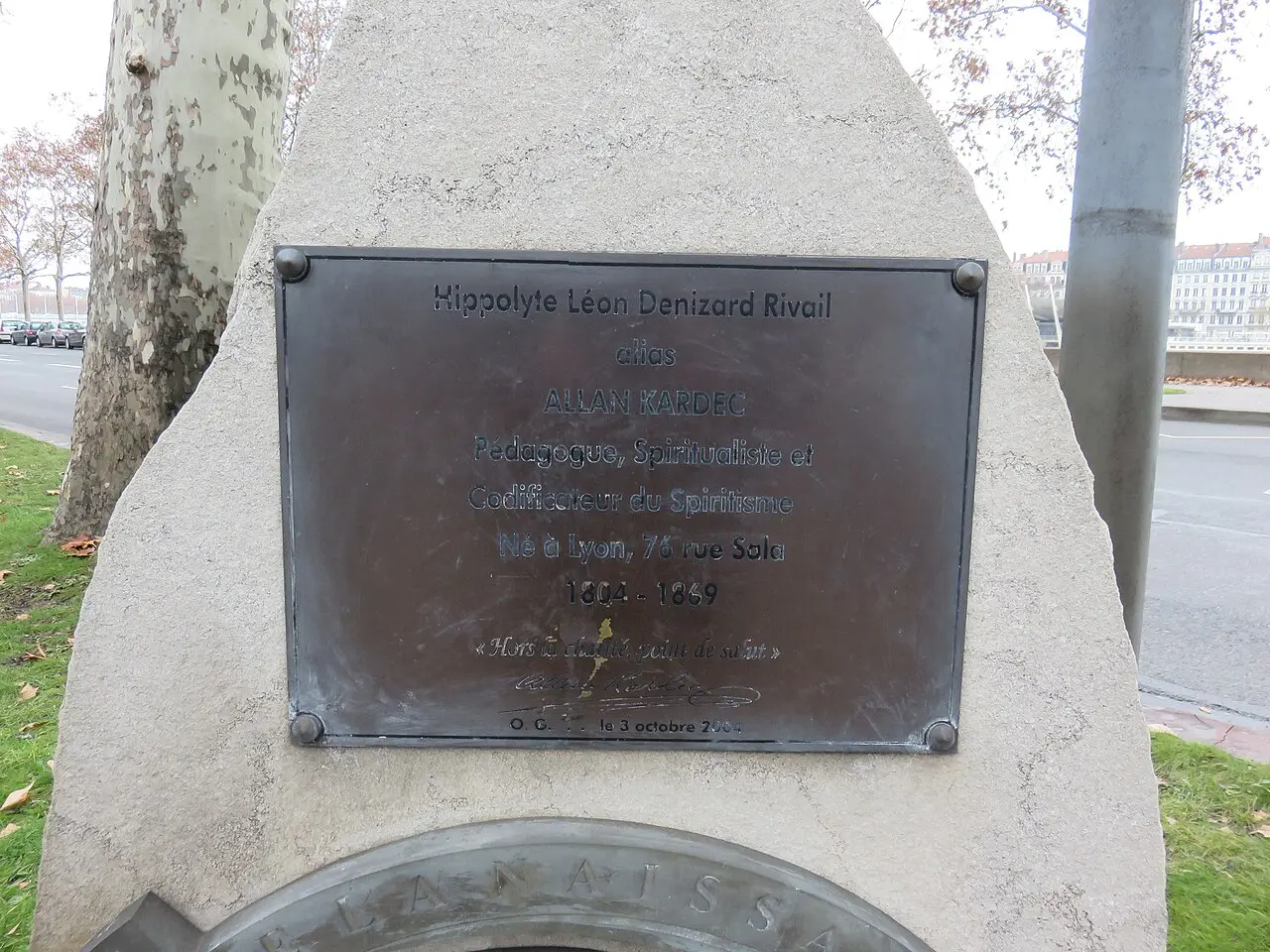
Born in Lyon on 3 October 1804, Rivail belonged to a long-established family of magistrates. While still young, he moved to Switzerland to study at the renowned Institute of Yverdon, becoming one of the most brilliant disciples of Johann Heinrich Pestalozzi, the father of modern pedagogy.
Back in Paris, Rivail devoted his adult life to education: he taught chemistry, physics, astronomy and physiology, published several textbooks on grammar and arithmetic and translated classic works. When he first came into contact with mediumistic manifestations in 1855, he was already a mature man of fifty, accustomed to academic rigour.
He adopted the famous name Allan Kardec (a name said to have belonged to one of his previous lives in Celtic Gaul) with a noble purpose: to separate his earlier scientific and pedagogical work from the new task of compiling and engaging in dialogue with the spiritual world, ensuring that the spotlight turned to the ideas rather than to their earthly author.
The works that shaped Spiritist thought
Between 1857 and 1868, Kardec carried out meticulous work: drawing up questions, cross-checking answers conveyed by different mediums in several countries and critically analysing the information. From this effort came the five works that form the basis of the Codification:
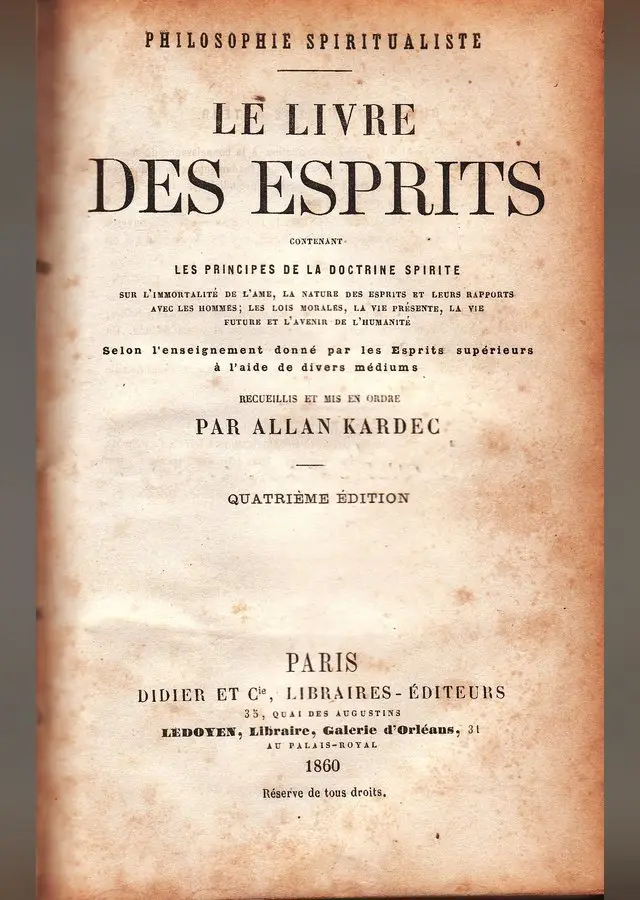
- O Livro dos Espíritos (The Spirits' Book, 1857): The foundational work, presenting the principles of the immortality of the soul, the plurality of existences (reincarnation) and the law of cause and effect.
- O Livro dos Médiuns (The Mediums' Book, 1861): The first scientific treatise on mediumship, detailing the sensory faculties and the moral care required in mediumistic practice.
- O Evangelho Segundo o Espiritismo (The Gospel According to Spiritism, 1864): The meeting of Christian morality and the teachings of Jesus in the light of reason and universal fraternity.
- O Céu e o Inferno (Heaven and Hell, 1865): A deep reflection on divine justice, suffering and the accounts given by spirits about the transition after physical death.
- A Gênese (The Genesis, 1868): The dialogue between the science of the period, the laws of nature and the spiritual interpretation of miracles and creation.
The central message: reasoned faith and charity
Allan Kardec's greatest legacy lies not in rituals or closed dogmas, but in the motto that summed up his stance: "Unshakeable faith is only that which can face reason face to face, in every age of humanity". Alongside this clarity of thought, Spiritism set as the highest banner of evolution the maxim: "Outside charity there is no salvation", placing solidarity in favour of others above any religious label.
After Kardec's death in Paris on 31 March 1869, his remains were buried in the famous Père-Lachaise cemetery, beneath a granite dolmen bearing the well-known inscription: "To be born, to die, to be born again and to keep progressing: such is the law".
Experiencing memory and the paths of faith
Understanding the history of thought and the figures who marked the spiritual evolution of humanity is one of the most enriching ways to travel. On Guatambu Travel expeditions, we value cultural and spiritual tourism that welcomes everyone, Spiritist or not, with absolute respect, kindness and a spirit of discovery.
Would you like to discover destinations of faith in Brazil and around the world in the best company? Explore our Rota Espírita itineraries and upcoming expeditions or send Guatambu a message on WhatsApp to ask questions and talk to our team.
Sources and references
- Works of the Spiritist Codification compiled by Allan Kardec: O Livro dos Espíritos (1857), O Livro dos Médiuns (1861) and O Evangelho Segundo o Espiritismo (1864).
- Federação Espírita Brasileira (FEB), the historical biography of Allan Kardec by Henri Sausse and documents of the Conselho Federativo Nacional.
- Historical archive and cultural travel memories of Guatambu Travel.