
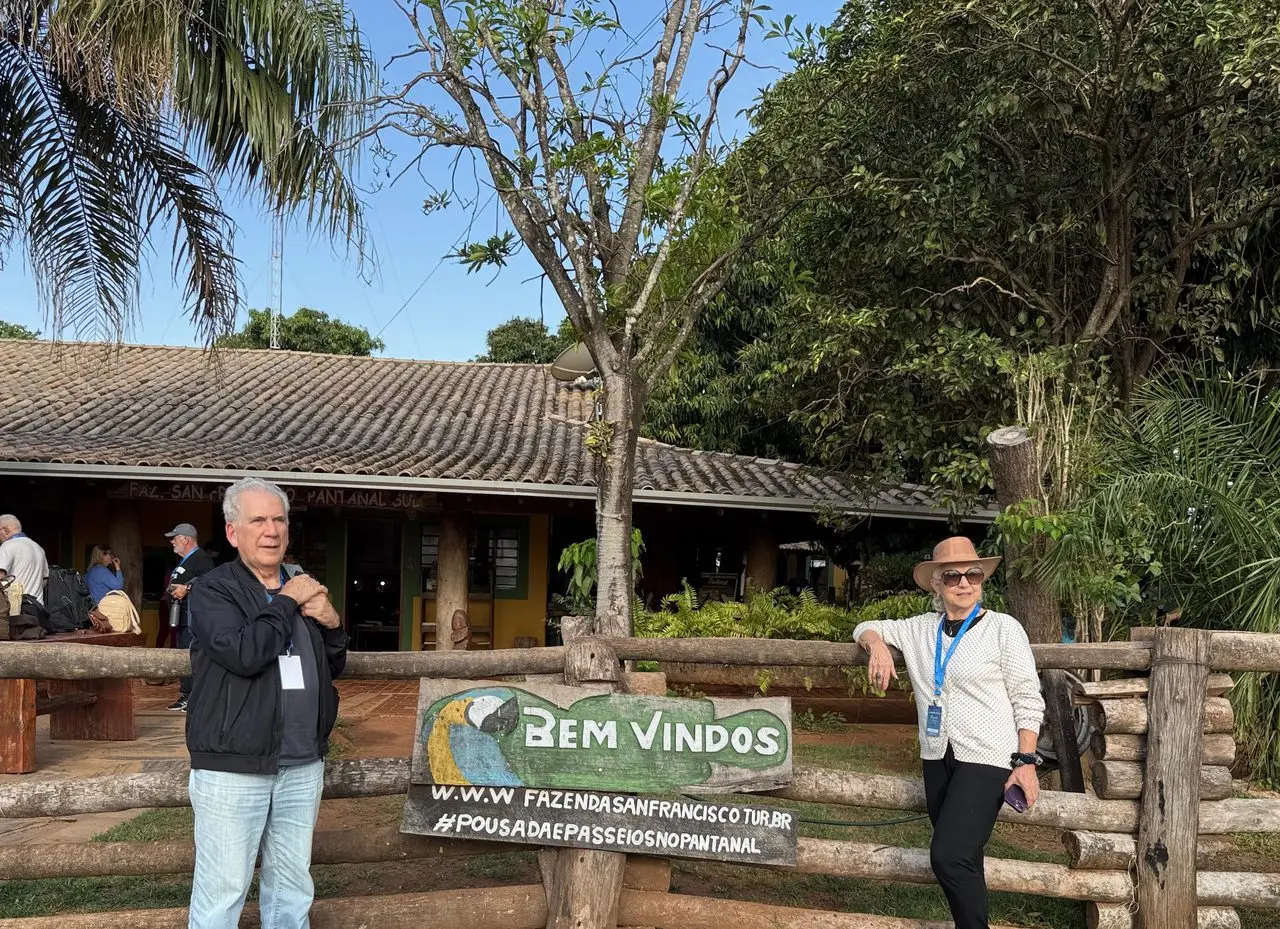
Fazenda San Francisco is a property in the Pantanal of Mato Grosso do Sul listed as the destination of a real caravan operated by Mundo a Passeio, serving as a base for contact with the Pantanal biome.
What defines a photographic safari farm in the Pantanal?
A farm focused on photographic safaris in the Pantanal is organised around trails, corixos (small natural watercourses) and areas of native woodland preserved within the property, creating controlled conditions for watching and photographing wildlife. Unlike a traditional cattle ranch, these properties balance farming with habitat conservation, keeping floodplains, islands of woodland and riverbanks intact precisely because these are the environments that attract and sustain wildlife. The internal logistics usually include open vehicles, boats for the corixos and observation points close to the areas with the most animal activity.
Why is the Pantanal one of the best places in the world to photograph wildlife?
The Pantanal combines a rare set of factors for nature photography: a high density of wildlife, wide visibility across open terrain and a relative habituation of the animals to human presence in certain conservation areas. Unlike dense forests such as the Amazon, where closed vegetation limits the line of sight, the Pantanal landscape alternates between open fields, islands of woodland and bodies of water that allow animals to be observed from greater distances and for longer periods. This geography, together with the cycle of dry season and flooding that concentrates wildlife seasonally, makes the region an internationally recognised destination among wildlife photographers.
Which species are usually seen on a Pantanal farm?
Among the species most often seen on Pantanal properties are the capybara, the yacare caiman, the tuiuiú (jabiru, the bird that symbolises the biome), blue and red macaws, toucans, pampas deer and, with luck and patience, the jaguar in areas near rivers. The diversity of birds is particularly notable: the Pantanal is home to hundreds of recorded species, both resident and migratory, which makes birdwatching as relevant an activity as the search for large mammals. The variety of species observed depends directly on the time of year and the water level in the region.
How does the daily routine work on a farm in the Pantanal?
The routine on Pantanal properties usually follows the natural rhythm of the wildlife, with outings concentrated in the early morning and late afternoon, when animal activity is higher and the light is more favourable for photography. During the middle of the day, when the heat is most intense, a break for rest is common, which also fits the behaviour of the wildlife itself, as movement decreases in this period. Activities typically alternate between land excursions on trails and in open vehicles and journeys along corixos and rivers by boat, with each type favouring the observation of different groups of species.
Which Mundo a Passeio itinerary includes Fazenda San Francisco?
Fazenda San Francisco appears in the destination field of a registered Mundo a Passeio caravan, which brings together the Pantanal, Bonito and Foz do Iguaçu in a single itinerary through Mato Grosso do Sul and Paraná. This combination allows travellers to experience, in one trip, the floodplain ecosystem of the Pantanal, the clear waters of Bonito and the Iguaçu Falls, three natural formations with very different geological and ecological characteristics. For information on the programme, what is included and other operational details of the caravan, the right channel is the agency's WhatsApp.
Is there a difference between visiting the Pantanal in the dry season and in the flood season?
Yes, the difference is decisive for the kind of experience you have on the farm. In the dry season (June to September), the rivers recede, animals gather near the remaining bodies of water and land access becomes easier, favouring photographic safaris with more predictable sightings. In the flood season (December to March), large areas are submerged, getting around becomes predominantly by water and the landscape turns into a wide sheet of water broken up by islands of vegetation, which completely changes the kind of observation possible and especially favours aquatic wildlife and birds. Before planning the date of your visit, it is worth considering which of the two experiences suits the traveller's interests better, since both reveal different and complementary sides of the same biome, and each requires different logistical preparation from whoever organises the itinerary.
What is a corixo and why is it important in the Pantanal?
Corixo is the name given, in the Pantanal region, to the small watercourses that connect baías (natural lagoons) and larger rivers, forming a drainage network that is essential to the biome's hydrological cycle. These channels are natural routes both for aquatic wildlife and for the boats used on observation tours, giving access to areas that would be unreachable by land, especially during the flood season. It is precisely along the corixos that some of the best opportunities to see caimans, waterbirds and, in some cases, the jaguar itself on the move are concentrated.
A Pantanal farm works as an ideal starting point for understanding the dynamics of the biome up close, combining accommodation, trails and access to corixos in a single place within the natural landscape of the Pantanal.
To keep exploring the itinerary, see also the best time to see jaguars in the Pantanal, where the Pantanal is and what to do in Bonito, MS.

