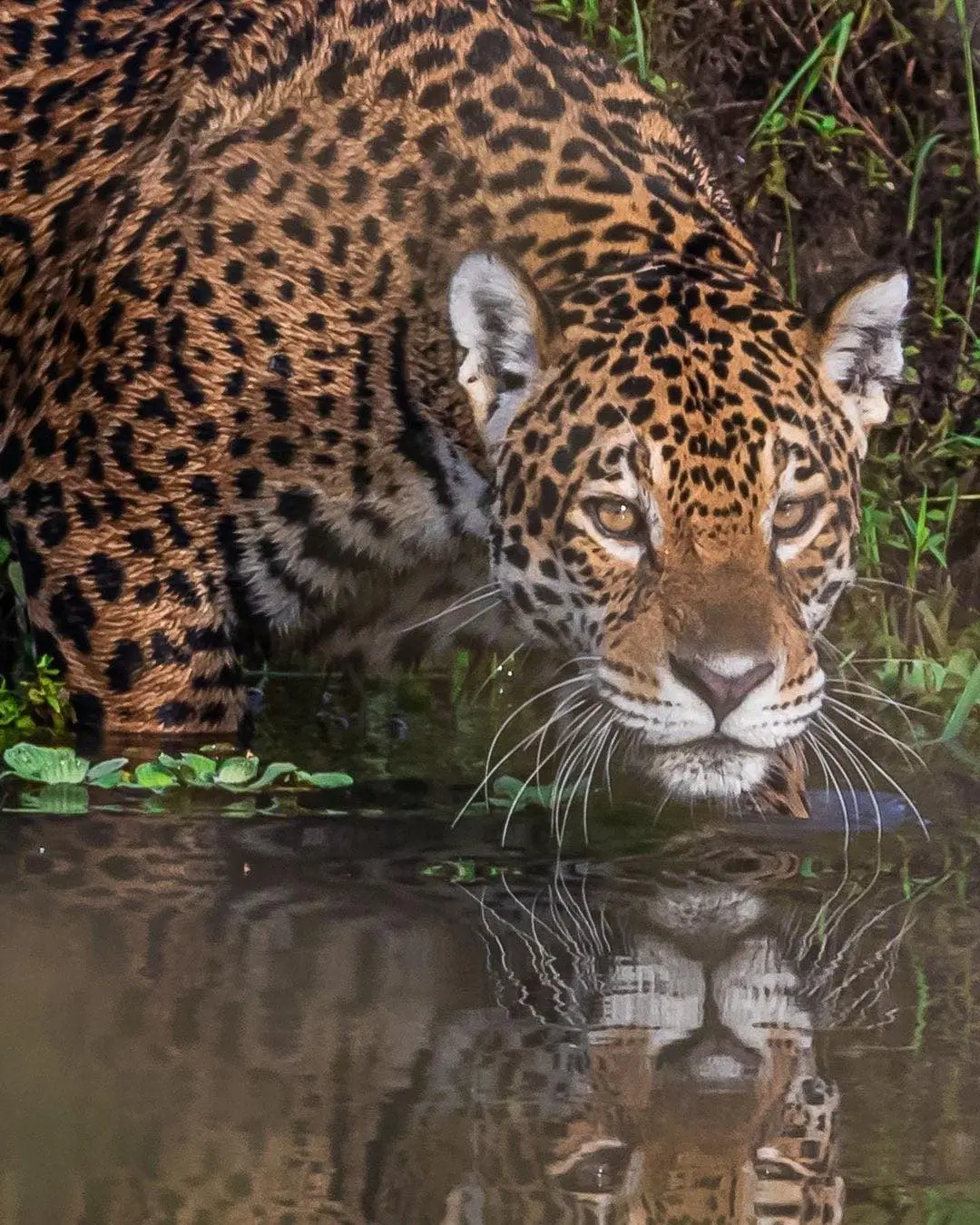
The best time to see jaguars in the Pantanal is the dry season, from June to September, when river levels fall and animals gather along the exposed banks.
Why does the dry season concentrate jaguars along the riverbanks?
In the dry season, the volume of water in the Pantanal drops and bodies of water shrink back to the main river channels. This reduces the flooded area available to fish, caimans and birds, which begin to crowd into these narrower stretches. The jaguar, which hunts mainly along the banks and is an excellent swimmer, follows this concentration of prey and visits the riverbanks more regularly, making sightings more predictable for those travelling these corridors by boat.
How does the jaguar behave in its Pantanal habitat?
The jaguar (Panthera onca) is a solitary, territorial feline whose habits include both daytime and night-time activity, unlike most big cats, which are mainly nocturnal. In the Pantanal, it tends to move and rest close to water, which is explained by its habit of preying on capybaras and caimans and by the species' natural tolerance for swimming and crossing rivers. This close relationship with the aquatic environment is the reason why boat trips along the Pantanal rivers are the most effective way to observe the animal in natural conditions.
What is the difference between the dry season and the flood season in the Pantanal?
The flood season, which takes place in summer (December to March), inundates large stretches of the Pantanal plain, making travel on land harder and dispersing wildlife over a much larger area. The dry season, in winter (June to September), exposes sandbanks, lowers the rivers and concentrates animals at predictable points. This alternation between flood and dry season is the flood pulse that governs the whole ecological dynamic of the biome, shaping everything from the vegetation to the breeding and feeding behaviour of the species that depend on the hydrological cycle.
What else can be seen in the Pantanal besides the jaguar?
The Pantanal is home to one of the largest concentrations of wildlife in South America, notably birds such as jabiru storks (tuiuiús), toucans and macaws, as well as caimans, capybaras, pampas deer and monkeys. This wealth of species is directly linked to the biome's cycle of floods and dry seasons, which creates mosaics of vegetation among grassland, patches of woodland (capões de mata) and corixos (small watercourses). Those who visit the region during the dry season tend to encounter a larger number of species in a short time, precisely because of the concentration of animals near the remaining bodies of water.
Is Fazenda San Francisco part of any wildlife-watching itinerary?
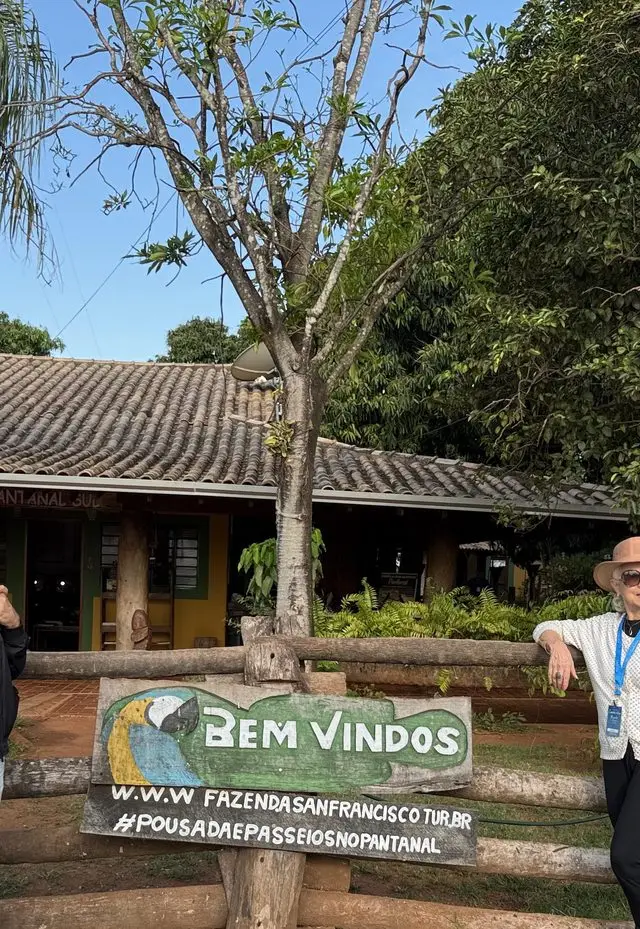
Fazenda San Francisco appears as a destination on a real caravan run by Mundo a Passeio, which includes the Pantanal, Bonito and Foz do Iguaçu in the same itinerary. The farm serves as an accommodation base and support point for activities that bring visitors into contact with the Pantanal ecosystem, on a property that preserves native areas of the biome. For details of the programme, dates and what is included in the experience, the right way is to confirm directly via the agency's WhatsApp.
Seeing a jaguar in the Pantanal is an experience that depends on patience, luck and the right moment in the biome's hydrological cycle. Understanding how the dry and flood seasons work helps to set expectations before any trip to the region.
Is there a time of day that is best for sightings?
Early morning and late afternoon tend to be when the jaguar is most active, a period when temperatures are milder and the species moves more often in search of water and prey. During the hottest hours of the day, the animal commonly rests, usually near shady vegetation on the riverbanks. For this reason, wildlife-watching outings in the Pantanal are usually organised in blocks that respect this natural rhythm, setting out early and returning at dusk.
Why is the Pantanal considered one of the largest floodplains in the world?
The Pantanal is formed by the Paraguay River basin and its tributaries, in a geological depression that receives and holds water seasonally, creating one of the largest continuous floodplain systems on the planet. This particular geography, combined with a rainfall pattern concentrated in summer and a dry spell in winter, produces the flood pulse that characterises the biome. It is precisely this alternation between water and dry land that sustains the region's exceptional biodiversity, making it internationally recognised as a natural heritage site.
Is the jaguar threatened with extinction?
The jaguar is classified as a Near Threatened species globally by the International Union for Conservation of Nature, with populations that are more vulnerable locally in areas of habitat loss and conflict with farming activities. The Pantanal is recognised as one of the most important strongholds for the conservation of the species in South America, precisely because of the extent of preserved habitat and the relative abundance of natural prey. Responsible observation tourism, which keeps a safe distance and does not interfere with the animal's behaviour, is pointed out by researchers as a factor that adds economic value to the conservation of the wild jaguar, as an alternative to activities that put the species in direct conflict with cattle ranching.
To keep planning your trip, see also Fazenda San Francisco and photo safaris in the Pantanal, where the Pantanal is and what the coach journey from Porto Alegre to the Pantanal is like.