Imagine waking up to clean mountain air, enjoying a quiet coffee and walking along cobbled streets that hold four centuries of history, all just a few hours' flight from Brazil. Between the Sierras de Córdoba and the relaxed, unhurried rhythm of the Argentine interior, the city of Córdoba hides one of the oldest and best-preserved histories in the Americas. The second-largest city in the country, with about 1.5 million inhabitants, it is affectionately called La Docta (the learned one, the wise) by Argentines, a nickname it carries with pride thanks to a university tradition that has passed the four-century mark.
And here is a secret: while everyone rushes to Buenos Aires and Bariloche, you can be one of those clever travellers who discover Córdoba before the crowds. It is a provincial capital where colonial houses, baroque churches and the energy of the students coexist in harmony with the serenity of the mountain villages. One of those places you visit and think: "how come I had never heard of this?".
Come along with us. In this guide, we will take an unhurried stroll through everything that makes Córdoba so special, from the historic heart listed by Unesco to the fairy-tale villages in the hills, with stops for a good fernet, the infectious beat of cuarteto and the warmth of the mountain people. Get ready to travel, because the wish will grow with every paragraph.
What is the Manzana Jesuítica in Córdoba, Argentina?
The Manzana Jesuítica is a group of buildings in the historic centre of Córdoba, Argentina, declared a Unesco World Heritage Site in 2000. Stop and think about what that means: in a single block of the historic centre, you walk through an extraordinary testimony to the presence of the Society of Jesus in colonial America, from the very beginning of the 17th century. It is living history, right there within reach of your steps.
The complex includes the National University of Córdoba, founded by the Jesuits in 1613 and one of the oldest universities in the Americas, older than most higher education institutions on the continent. Walking through its cloisters is an almost magical experience: you can almost hear the echo of generations of students who dreamed there. Next door is the Colegio Nacional de Monserrat, also centuries old, and the jewel in the crown, the Church of the Society of Jesus, whose construction began in the early years of the 17th century. Look up and you will see the detail that delights every visitor: the ceiling shaped like an upturned ship's hull, made entirely of wood. It is such an ingenious and rare solution that it seems like a carpenter's spell, and it is in fact attributed to the naval carpentry knowledge of the time. Pure genius.
What to see in the colonial centre of Córdoba, Argentina?
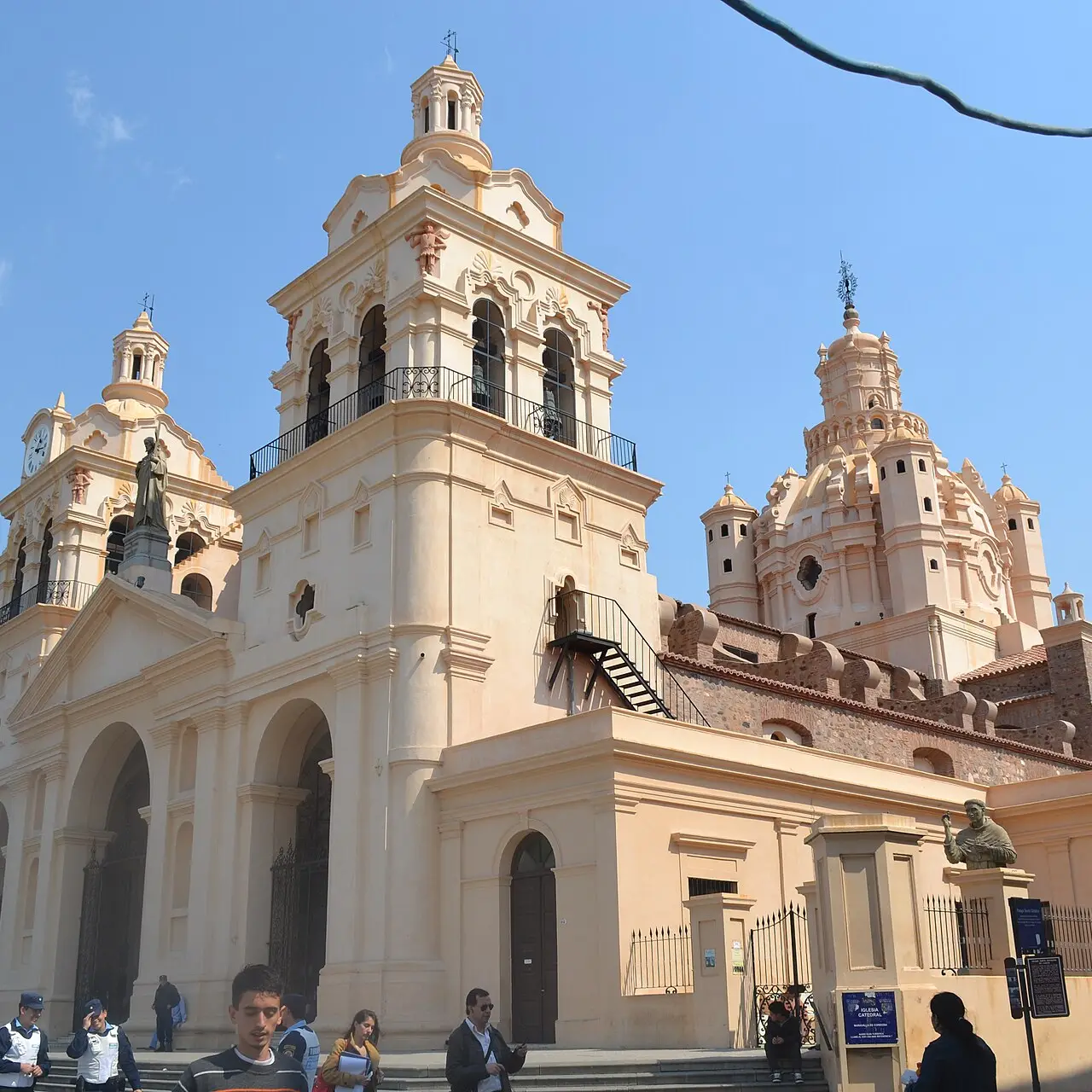
The colonial centre of Córdoba, Argentina, has at its heart the Plaza San Martín, a square that has been pulsing since the founding of the city in 1573. Sit on a bench, feel the breeze, watch life go by, and let your eyes rise to the imposing Córdoba Cathedral. Its construction dragged on for more than a century (calmly, like everything here!) and so it blends styles from the colonial to the baroque, making it one of the oldest cathedrals still in use in Argentina.
On the same square, with its elegant façade of white arcades, stands the Cabildo, the former seat of colonial government. Today it houses cultural spaces and museums, and you only need to cross its inner courtyards to feel the administrative history of the city whispering from the walls. Set aside some time, and an open heart, for the Museo de la Memoria, housed in a former building that was a detention centre during the military dictatorship. It is a place of silence and reflection on Argentina's recent history, the kind that stays with you. And along the narrow lanes of the centre, the walk is a box of surprises: churches, old balconies and the everyday coming and going of a city that proudly embraces its own heritage.
What are the Jesuit Estancias in the province of Córdoba?
The Jesuit Estancias are former rural properties scattered across the interior of the province of Córdoba, Argentina, which financially supported the works of the Jesuit religious order. Unesco World Heritage in Córdoba is not confined to the city. Five of them, Alta Gracia, Jesús María, Santa Catalina, La Candelaria and Caroya, are part of the Unesco recognition together with the Manzana. That is five more reasons to fall in love.
They were not simple farms: they were complete productive units, with churches, residences, workshops and irrigation systems that still leave everyone open-mouthed. Santa Catalina, for example, boasts a church with a baroque façade of breathtaking beauty, solitary and majestic in the middle of open countryside, the kind of image that stays in the memory for ever. Visiting these estancias is like pressing the rewind button and truly understanding how faith, work and architecture danced together in the Argentine backcountry of the 17th and 18th centuries.
What to visit in Alta Gracia, Argentina?
Alta Gracia is a town about 35 kilometres from the capital, Córdoba, in Argentina, and one of the best-loved stops in the region, for good reason. Besides housing one of the Jesuit estancias, the small town holds quite a surprise: the childhood home-museum of Ernesto "Che" Guevara, where the future revolutionary spent part of his boyhood. The family moved to the hills in search of the dry climate recommended for the boy's asthma, and who would have thought that this boy would grow up to become a global icon?
But the list of illustrious figures does not end there. In his last years, Alta Gracia was also the refuge chosen by the great Spanish composer Manuel de Falla, whose residence has likewise become a museum. Isn't that remarkable? In one quiet village in the Sierras, the memories of a 20th-century political icon and of one of the greatest names in Spanish classical music sit side by side. Where else in the world do you find a combination like that, set against a mountain landscape?
Life in the Sierras: La Cumbrecita, Carlos Paz and breathtaking villages
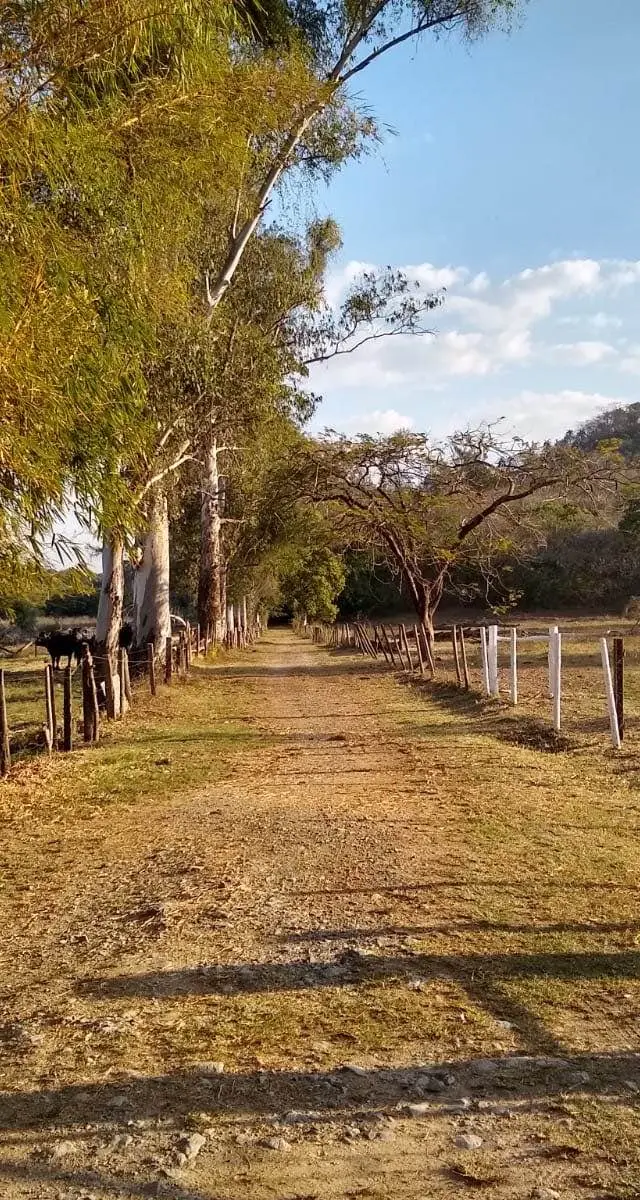
If one thing makes Córdoba such a complete destination, it is the pleasant ease of combining city and mountains in the same trip. The Sierras de Córdoba serve up, on a single plate, fresh air, crystal-clear rivers and villages for every taste and mood.
- La Cumbrecita is a village of Alpine and Central European inspiration, founded by German immigrants. With its half-timbered architecture, streets where cars do not enter the centre and that fairy-tale air, it feels as though you have crossed to another continent. Perfect for relaxed walks among the woods, breathing deeply.
- Villa Carlos Paz, on the shores of Lake San Roque, is the busiest summer resort in the province: lively, full of life and famous for its big cuckoo-shaped clock, the fun postcard that everyone wants in their photo.
- And there is also Villa General Belgrano, with a strong German heritage and celebrated for its typical autumn festival; plus La Falda and Mina Clavero, with their inviting river resorts.
Connected by scenic roads that are a spectacle in themselves, these villages reveal another Argentina, quieter, greener, more welcoming. The Argentina that makes you want to stay.
Córdoba culture: fernet, cuarteto and plenty of warmth
No visit is complete without diving into the local flavour, and the invitation here is irresistible. Fernet and cola, that bitter herbal drink paired with Coca-Cola, is practically a sacred institution in Córdoba, present at any gathering worth the name. And the soundtrack of the province? It is cuarteto, a lively, infectious dance rhythm that was born there in the 1940s and makes the popular dance halls shake. Do not be alarmed if your feet start moving on their own.
At the table, get your appetite ready: try the chivito (roast kid goat), typical of the hills, the mouth-watering handmade dulce de leche sweets and the famous alfajores of Córdoba. But above all, what stays with you is the hospitality of the hills. People from Córdoba are known throughout Argentina for their abundant good humour, their sing-song and charming way of speaking and the generosity of those who welcome you as if you were family. You arrive as a tourist and leave as a friend.
For the traveller: what to know before packing
Before setting off, a few practical tips to enjoy every minute without hassle:
- When to go: the climate in the hills is mild and dry, a delight. Spring (September to November) and autumn (March to May) are usually the most pleasant times, with clear days and comfortable temperatures. Summer is hotter in the valleys; winter brings chilly nights in the hills (great for a fernet beside the fireplace).
- What to bring: even on hot days, nights in the mountains cool down, so a light jacket is your best friend. And do not neglect your feet: comfortable footwear is essential for the old paving in the centre and the paths in the villages.
- Pace: the city centre is walkable and pleasant to explore on foot, but the estancias and the mountain villages call for road journeys. With patience and good planning, you can combine history and nature without any tiredness.
- Language and currency: Spanish is a close cousin of Portuguese, and people in Córdoba are very patient with us. Always carry some cash for the smaller villages, trust us on that.
Córdoba is not a destination to rush through. It is to be savoured slowly, like a good mate at dusk.
Travelling to Córdoba without hurry and in good company
Córdoba is one of those destinations that wholeheartedly rewards those who walk slowly, listen to the guides' stories and let themselves be charmed by small details: the ceiling of a Jesuit church, the perfect silence of an estancia in the countryside, the golden light of dusk spilling over the Sierras. These are the moments that become lifelong memories.
And here is the best part: you do not have to worry about any of this alone. For those who prefer to explore Argentina without the stress of driving on unfamiliar roads, arranging transfers or hunting down visiting hours, travelling in a guided group changes the game completely. The itinerary comes thought out, the transport is comfortable, and the company of other travellers makes every stop lighter, more fun and full of laughter. It is in this way, with time, calm and good people nearby, that this historic and mountain Argentina reveals itself in full, and stays in your heart for ever. How about it? Discover our expeditions and see Córdoba at your own pace, the way it deserves to be experienced.
Cover image: CC-BY-SA-3.0 (author: Wiki Loves Monuments 2012, Nadiapicco), via Wikimedia Commons (https://commons.wikimedia.org/wiki/File:Frente_de_catedral_de_cordoba.JPG).