There is a freshwater Brazil that most people only know from photographs, and in person it can take the breath away even from those who have seen a great deal in life. It is a plain that fills and dries as if breathing deeply, rivers so transparent that you can see the bottom, a curtain of waterfalls that you hear before you see. This water route links three destinations in the Central-West and South of Brazil, the Pantanal, Bonito and Foz do Iguaçu, in one of the most moving journeys you can make within our own country. And the best part: it is the kind of trip that truly suits an unhurried pace, without rushing, with time to savour every moment and with trusted people by your side.
Come and imagine this journey with us. You will see: it makes you want to pack your bags halfway through the reading.
What is the Pantanal?
The Pantanal is the largest floodplain in the world, with its main area in Mato Grosso and Mato Grosso do Sul, in the Central-West of Brazil. Close your eyes for a moment and imagine a dawn there: the sky painted pink and orange over a plain that never seems to end, the air still cool, and the sound, first one, then a hundred, of birds waking the day. This is how the day begins in the largest floodplain (wetland) on the planet, which spreads mainly across Mato Grosso and Mato Grosso do Sul, with parts in Bolivia and Paraguay. It is not a closed forest like the Amazon, and that is exactly why the Pantanal is the best place in Brazil to watch wildlife: the open vegetation puts the animals right in front of you, as in an open-air theatre.
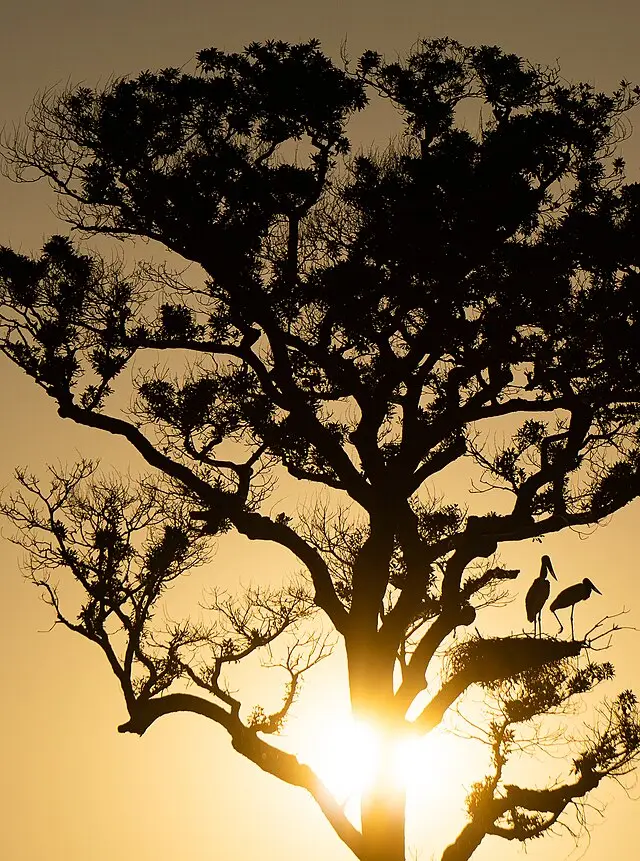
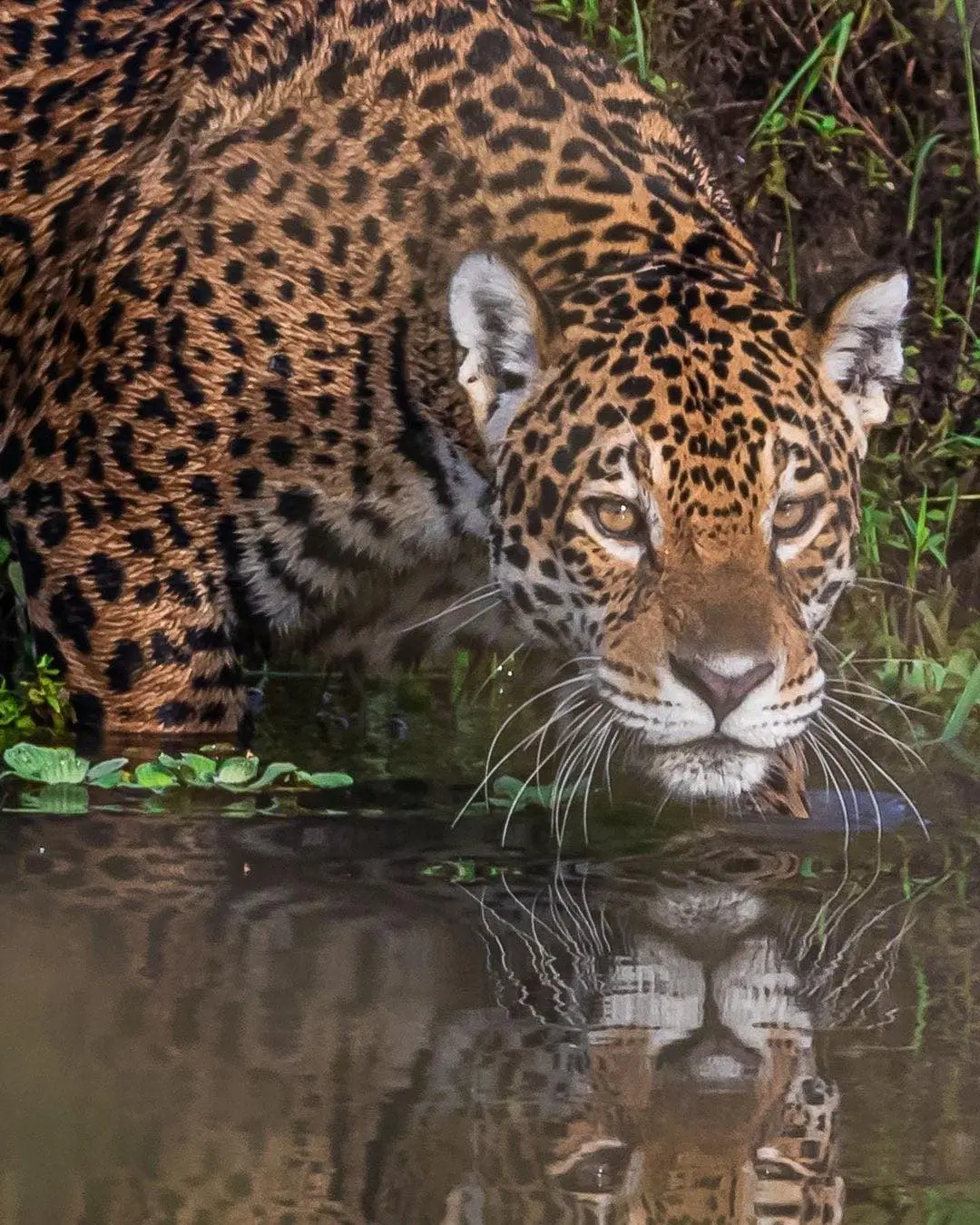
And what a cast! Abundant, generous wildlife lives here. The jaguar, the largest feline in the Americas, has one of its last great refuges in the Pantanal, and few thrills compare with the moment it appears, silent and sovereign, on the riverbank. Along the waters and banks you will see thousands of caimans basking in the sun, whole families of capybaras parading unhurriedly, giant otters (ariranhas) playing in the current and hundreds of species of colourful birds. The greatest star is the jabiru (tuiuiú), an imposing red-necked bird that has become the symbol of the region: when it opens its wings, it feels as if the whole landscape comes to life.
In the Pantanal, the landscape changes with the calendar, like a story told in chapters: in the flood season, water rules everything; in the dry season, it recedes and concentrates life around what remains of the rivers. In any season, it is impossible not to be enchanted.
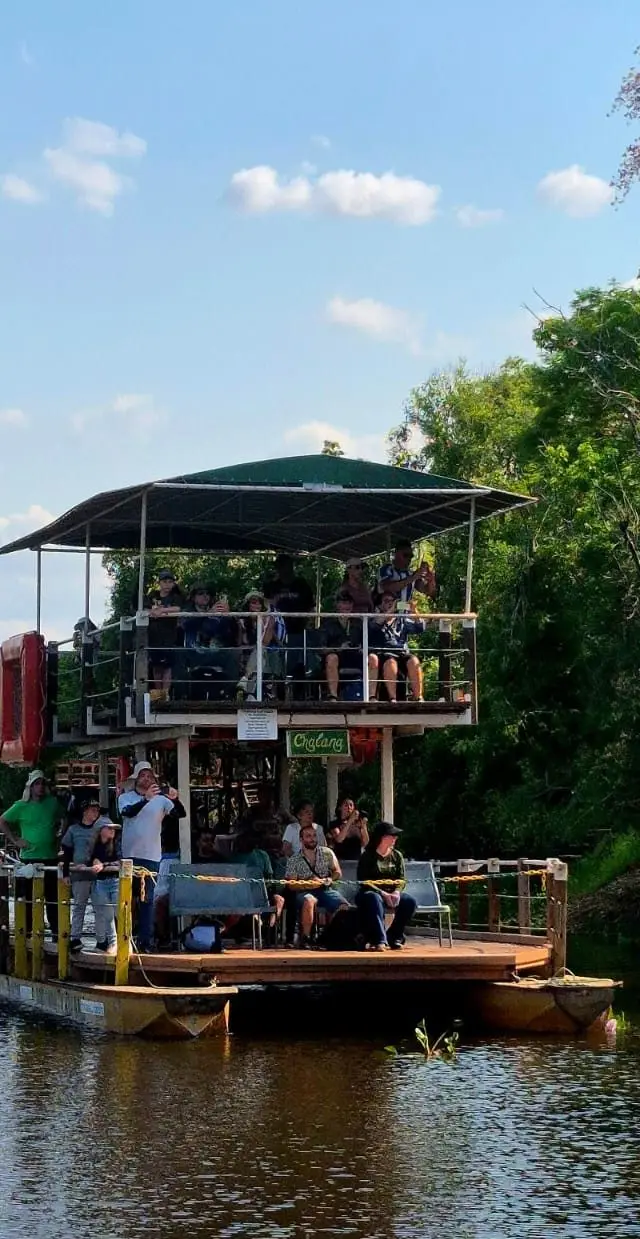
Visits take place on photo safaris, with trips by vehicle, by boat and on foot, always led by guides who know every inch of the terrain and know exactly where to look. The main access on the southern side is along the Estrada Parque Pantanal, a dirt road with dozens of wooden bridges where the route itself is already the show: around every bend, a lazy caiman in the sun, a bird fishing on the bank, a new surprise. You do not need to go looking for nature here, it comes to you.
And understanding the dynamics of floods and droughts helps you dream of the best moment to go. From about November to March it rains and the plain floods, becoming an immense mirror of water; from about May to September comes the dry season, the water drops and the animals gather at the places where it remains. That is why the dry season is the best time to spot wildlife: more animals concentrated, firm roads for getting around and that feeling of being in the right place at the right time.
What to see in Bonito?
Bonito, in Mato Grosso do Sul, is known for its transparent rivers, formed by the natural filtering of the region's limestone soil. The town reveals another face of water, and perhaps the most surprising of all. Here the limestone soil filters the rivers and leaves them with an impressive transparency, in shades of green and blue so vivid that, at first glance, you doubt they are real. The town has become a national benchmark for organised, sustainable nature tourism: most excursions limit the number of visitors per day and require booking, precisely so that this beauty remains intact for ever.
The most famous experience, and one of the most unforgettable, is the float (flutuação, river snorkelling). With a life jacket, mask and snorkel, you drift downstream, carried by a gentle current, and watch shoals of fish pass a few centimetres from your face, as if you were part of that submerged world. It is light, calm, magical. The Rio da Prata is the best known for this, with a short trail through the forest to the spring and a float in waters so clear that you forget to breathe.
And Bonito still holds jaw-dropping geological formations:
- The Gruta do Lago Azul, a cave whose descent leads to an underground lake of a deep, luminous blue, especially intense when the sun enters through the opening and lights the water from within, one of those images that stay with you for life.
- The Buraco das Araras, an enormous sinkhole (circular depression) where red macaws nest and cross the sky in flocks, in a dance of colours and cheerful cries. Best of all: everything can be enjoyed from the viewpoints, comfortably and without physical effort.
What to see in Foz do Iguaçu?
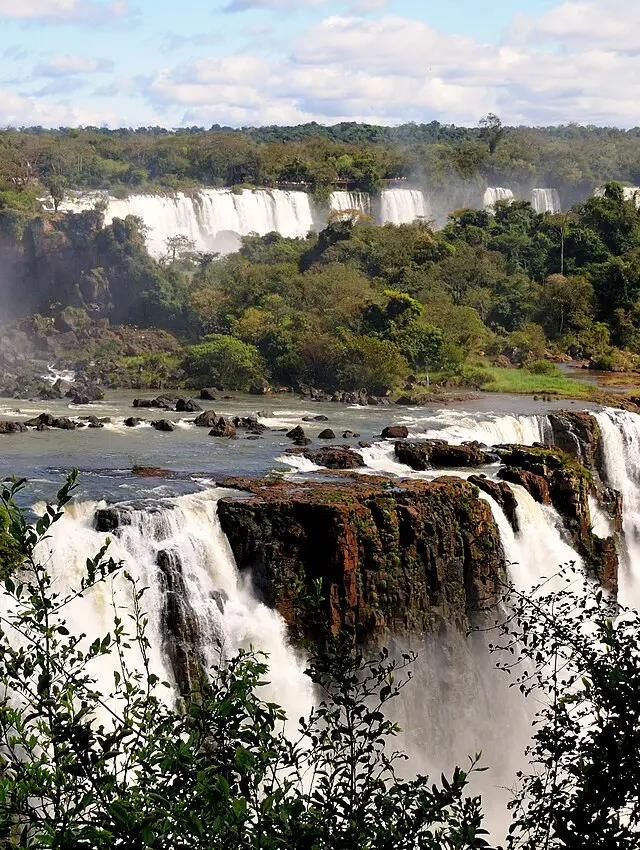
Foz do Iguaçu, in the far west of Paraná, brings together the Iguaçu Falls, the Itaipu Dam and the Marco das Três Fronteiras, where Brazil, Argentina and Paraguay meet. The city concentrates three visits that complement one another like a grand finale to the journey. The first, and the reason for so much fame, is the Iguaçu Falls (Cataratas do Iguaçu), a series of hundreds of waterfalls that the Iguaçu River forms shortly before meeting the Paraná River. You hear them before you see them: a constant thunder that grows until you turn the corner and... there they are, in a spectacle that UNESCO recognised as a Natural World Heritage Site. The most imposing point is the Garganta do Diabo, a curve of falls where the water plunges with such force that it raises a permanent mist and, with luck and sun, a rainbow that seems to appear just for you.
On the Brazilian side, the Falls are revealed from walkways that lead to wide panoramas, with a platform extending almost over the Garganta do Diabo, where the water splashes your face and your heart races with so much beauty. And the region offers two more grand landmarks:
- The Itaipu Hydroelectric Plant, one of the largest in the world in power generation, with guided visits that show, up close, the colossal size of the dam, a work that impresses as much as nature itself.
- The Marco das Três Fronteiras, a viewpoint where the Iguaçu and Paraná rivers embrace and where you can see Brazil, Argentina and Paraguay all at once. Three countries in a single glance: it even gives you a pleasant flutter in the stomach.
Why take the Pantanal, Bonito and Foz do Iguaçu route?
This route brings together three destinations where water shapes the landscape in different ways: flooding the Pantanal, carving the caves of Bonito and plunging at Foz do Iguaçu. More than three stops, this is a journey about water as a force of the landscape, flooding the Pantanal, carving the caves of Bonito, plunging at Foz in all its majesty. It is also a route of encounters: of borders that touch, of peoples who mingle and of wildlife that shows itself without fear. For those who appreciate nature with attentive eyes and an open heart, there are very few places in Brazil that offer so much observable life in so few days, always with the safety and care of local guides who know where and when to look, so that you miss nothing.
For the traveller
Some practical guidance, prepared with great care for older travellers, so that you can enjoy every moment with ease:
- Best time to go: for Pantanal wildlife, choose the dry season (about May to September): animals concentrated, firm roads and less humid heat. The Falls, on the other hand, impress all year round; after the rains, the volume of water is even more spectacular.
- Pace: the Falls and the Pantanal involve walks on walkways and trails, generally flat and well kept, but which call for sturdy footwear and a few pauses. Go at your own pace, with no hurry at all, the landscape will wait for you.
- Accessibility: much of the walkways at the Falls and the Estrada Parque can be reached by vehicle or on very short routes. In Bonito, the float is calm and relaxing, but there are trails to the springs, so find out about the effort involved in each excursion to choose the one that suits you best.
- What to pack: sun cream, insect repellent, a hat, water, light clothing and a thin rain jacket (which makes all the difference near the Falls, because of the mist).
- Health: keep your regular medication always to hand and talk to the guide about any limitation, so the itinerary can be adjusted to you, just as you deserve.
Travelling accompanied makes all the difference
This is a route of long distances and many details: bookings in Bonito, safari times, journeys between states. Doing it in a guided group, by coach, takes the whole weight of logistics off your shoulders: someone takes care of the reservations, the transport and the pace, and you are free for what really matters, admiring the landscape, making new friends and collecting memories to tell with a sparkle in your eyes. For older travellers, it is the lightest, safest and happiest way to get to know the Pantanal, Bonito and Foz, in good company, calmly and with people who know the way. Discover our expeditions and come with us to experience Brazil's great water route. Wild nature is waiting for you with open arms.