What is amethyst? The purple stone born inside basalt
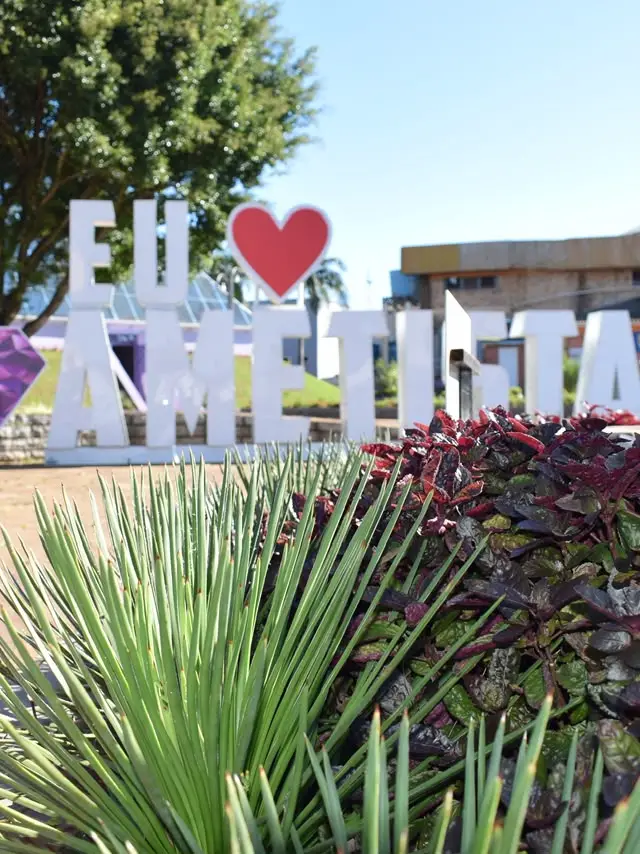
Amethyst is the name for purple quartz, one of the most abundant minerals in the Earth's crust, which in a strip of land between north-west Rio Grande do Sul and Uruguay reached its most spectacular form: whole geodes lined with violet crystals, some as big as a person. This region, with Ametista do Sul at its centre, forms the largest amethyst province in the world.
If you are travelling with us in November to Ametista do Sul and Derrubadas, it is worth getting to know the stone beforehand. It changes the way you see the mines, the church and even the shop windows in town.
What amethyst is made of
Amethyst is quartz (silicon dioxide, formula SiO₂) with one extra feature: its colour. The purple comes from traces of iron trapped in the crystal which, under natural irradiation from the surrounding rocks over millions of years, create what are known as colour centres. This process has been confirmed in the laboratory: colourless quartz containing iron turns violet when irradiated.
On the Mohs hardness scale, used in gemmology, quartz scores 7 out of 10, a durable stone that is good for jewellery and objects. But amethyst has a weak point: direct sunlight and prolonged heat can fade the purple. And when it is heated industrially, amethyst turns yellow: a good share of the citrine sold around the world is, in fact, burnt amethyst.
How a geode is born inside rock
The story of the amethyst of Rio Grande do Sul begins with volcanoes. About 135 million years ago, enormous lava flows covered the south of Brazil in layers of basalt, the Formação Serra Geral, one of the largest volcanic fields on the planet. Gases trapped in the cooling lava formed hollow bubbles inside the rock.
Over the ages, silica-rich water seeped into these cavities and crystallised on the walls, from the outside in: first chalcedony, then clear quartz and, in the right pockets, the crowns of amethyst. When the miner opens the basalt and finds the complete bubble, the "amethyst cathedral" is born: a market name, not a scientific one, for elongated geodes that are cut and polished to stand upright.
In the region of Ametista do Sul and Artigas (Uruguay), these cavities can weigh more than a tonne. The largest amethyst geode on display in the world weighs more than 31 tonnes and stands 6 metres tall, and it is on display in Rio Grande do Sul, in Gramado.
The name that promises sobriety
"Amethyst" comes from the Greek amethystos, "not intoxicated". The Greeks and Romans carved amethyst cups believing the stone prevented excess wine; the naturalist Pliny the Elder already recorded (and mocked) this belief in the 1st century. The romantic myth of Bacchus and the nymph Amethyst, so often repeated, is actually an invention of the 16th-century French poet Rémy Belleau.
From Antiquity the stone passed to royalty: the Egyptians used it in engraved gems, and the British Crown holds a historic set of amethysts from the 19th century. In jewellers around the world, the deep, high-quality purple is still nicknamed "royal purple" or "Siberian", a legacy of the amethysts of the Urals, favoured by the courts of Europe.
The stone of bishops and of February
Two symbolic uses survive to this day. The first: amethyst is the birthstone of February, and tradition has it that Saint Valentine, the patron saint of lovers, wore an amethyst ring engraved with the image of Cupid. The second: it is the "bishops' stone". Since the Middle Ages, Catholic bishops have worn an amethyst ring, an allusion to sobriety and to the colour purple, which is liturgical for Advent and Lent.
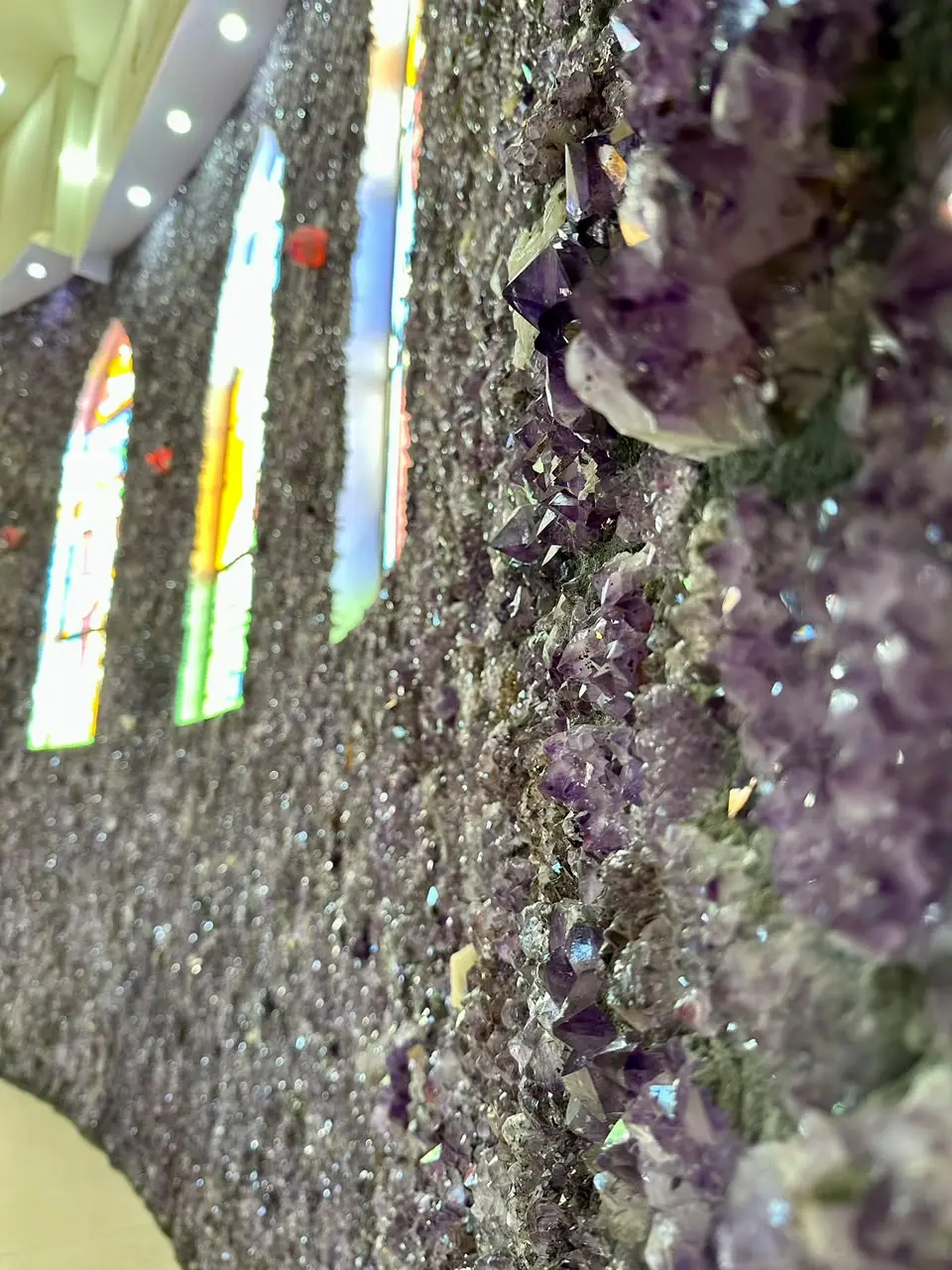
In esoteric traditions, amethyst is credited with the ability to calm and "transmute energies". This is a belief, not a scientific fact, and every traveller is free to believe it or not. What nobody disputes is the effect of seeing an entire wall of druses lit up: it is imposing.
Rio Grande do Sul on the amethyst map
The world map of amethyst has three major names: Brazil, Uruguay and Zambia. The largest province is ours: the mining district of Ametista do Sul extends to Artigas, across the border, in the same basalt. Such is its identity that amethyst became the symbolic mineral of Rio Grande do Sul.
The local discovery came gradually, between the 1930s and 1940s, in roots, streams and fields. Mining peaked in 1972, when open-pit excavations gave way to underground galleries, the "furnas" where visitors now walk.
Frequently asked questions
What is amethyst?
Amethyst is purple quartz (SiO₂), its colour caused by traces of iron subjected to natural irradiation. It has a hardness of 7 on the Mohs scale and crystallises in geodes inside basalt.
What is an amethyst druse?
It is the cluster of crystals that has grown on the inner wall of a cavity in the rock. The "amethyst cathedrals" are druses that have been cut, polished and mounted upright.
Does amethyst fade?
It can fade with prolonged exposure to sun or intense heat. For jewellery and objects, it is best to avoid windows and sources of heat.
Where is the largest amethyst region in the world?
In north-west Rio Grande do Sul and in the neighbouring department of Artigas, in Uruguay, which form the same basalt province. Ametista do Sul (RS) is considered the world capital of the stone.
Can I see giant geodes up close?
Yes. On the November expedition, the itinerary includes mines, the Museu Subterrâneo de Minerais Gigantes and the Ametista Parque Museu, with the largest collection of minerals in Latin America.
Discover the land of amethyst with people who know the road
The expedition Novembro 2026: Ametista do Sul e Derrubadas departs from Porto Alegre on 27 November, with a leito (sleeper) coach, a guide and a CADASTUR agent, and includes mines, museums, the amethyst church, the underground winery and the Salto do Yucumã. See the full itinerary at /expedicao/novembro-2026-ametista-do-sul-e-derrubadas and get in touch with us on WhatsApp.
The world is waiting for you. We take care of the rest.