Nearly every Spiritist centre has, at some point, the same conversation at the end of a study meeting: "what if we went to Uberaba?" Someone gets excited, three people say they are in, another asks how much it costs, and the subject cools until next year. When the trip does happen, it almost always happens because someone took charge and looked after the small things that seem unimportant and decide the outcome: who is going, who shares a room, who takes which medicine at what time, who studied what before boarding.
This is a behind-the-scenes conversation, from people who have seen groups succeed and groups struggle. No formula, but questions worth asking.
Start with the board, not the coach
The first step is not getting a quote. It is talking to whoever runs the centre. A Spiritist centre caravan is not just an outing for the regulars; it carries the name of the house, touches its calendar (there are days for care, for study, for children's Gospel classes) and can create different expectations among the people involved. It is worth asking the board three simple things.
The first is whether the centre wants to support the trip or merely authorise it. It makes a difference: supporting may mean announcing it on the notice board and at the public meeting, while merely authorising means the organisation belongs to the group. The second is who will coordinate the trip, one person, with authority to decide when there is a deadlock. The third is the purpose: does the board want a study trip, a fellowship trip, a social-action trip, or a bit of each? Answering this beforehand avoids the classic mismatch, in which half the group wants to visit Spiritist houses and the other half wants to stay by the pool.
One more precaution: keep the money separate. The trip's cost belongs to the group that travels, not to the centre's cash box, unless the board decides otherwise and puts it in writing.
Who looks after whom
In a group of forty, most of the difficult situations come not from the itinerary but from daily life: a forgotten medicine, blood pressure that climbs, a gentleman who does not like to ask for help. It works well to set up travel pairs from the start, each person with a "travel buddy" who knows what the other needs. It also helps to have a sheet with each participant's full name, the phone number of a trusted contact, regular medications and food restrictions, kept by the coordinator and shared with the guide.
At Guatambu, caravans have a guide and a travel agent accompanying the group from boarding to return, according to the page on the Spiritist caravan from Porto Alegre (Portuguese). That is a relief, but it does not replace the centre's coordinator: he or she knows the group. The guide knows the road; the coordinator knows Dona Maria and Seu Antônio.
Pace, older travellers and the right to rest
This is where most mistakes happen out of good will. People want to make the most of every hour and forget that the typical Spiritist caravan audience has different ages and energy levels. Our text on the day-by-day itinerary of a Spiritist caravan in the Triângulo Mineiro describes a model with a free afternoon on one of the first days, a free morning later on, a light day in Pratinha and breakfast at the hotel, for an audience aged 55 to 75. It serves as a reference for what to ask any organiser: how many hours on the coach each day, where the stops are, where there is real rest, what is optional.
An honest warning here: what does not appear in the site's texts, such as details of accessibility and mobility at each house, we do not state without confirming. If someone in the group uses a cane, a walker or a wheelchair, the question must be put to the organiser before you commit, place by place. Assuming does not count.
Giving each person the right to skip an activity is also part of caring. Resting for an afternoon is not a lack of faith. You can arrive whole at the next day's meeting.
Study before you go: one André Luiz book
Here is the suggestion that changes the trip the most. Before boarding, set aside a few weeks to study one André Luiz book together. It could be Nosso Lar, which has 50 chapters in the FEB edition and divides well into five meetings of ten chapters each. It could be another, as long as the centre is used to it. The advantage is concrete: when the group reaches Pedro Leopoldo, Uberaba or Sacramento, it already has a shared conversation, and the visits stop being a set of photographs and become a continuation of study.
Two tips for leading it. First, remember what the preface of Nosso Lar itself asks of the reader: that each one analyse what he reads. Group study is worth more with questions than with ready-made answers; the trip afterwards confirms or dissolves doubts. Second, nobody needs to have read it to go. Someone who joins the circle for the first time in the week of the trip is also part of the group, and study cannot become a condition for boarding.
If you want to connect reading and place, there is our conversation on Nosso Lar and Pedro Leopoldo and the one for those who read Chico Xavier and go to Uberaba, written for this kind of preparation.
Each place's rules count too
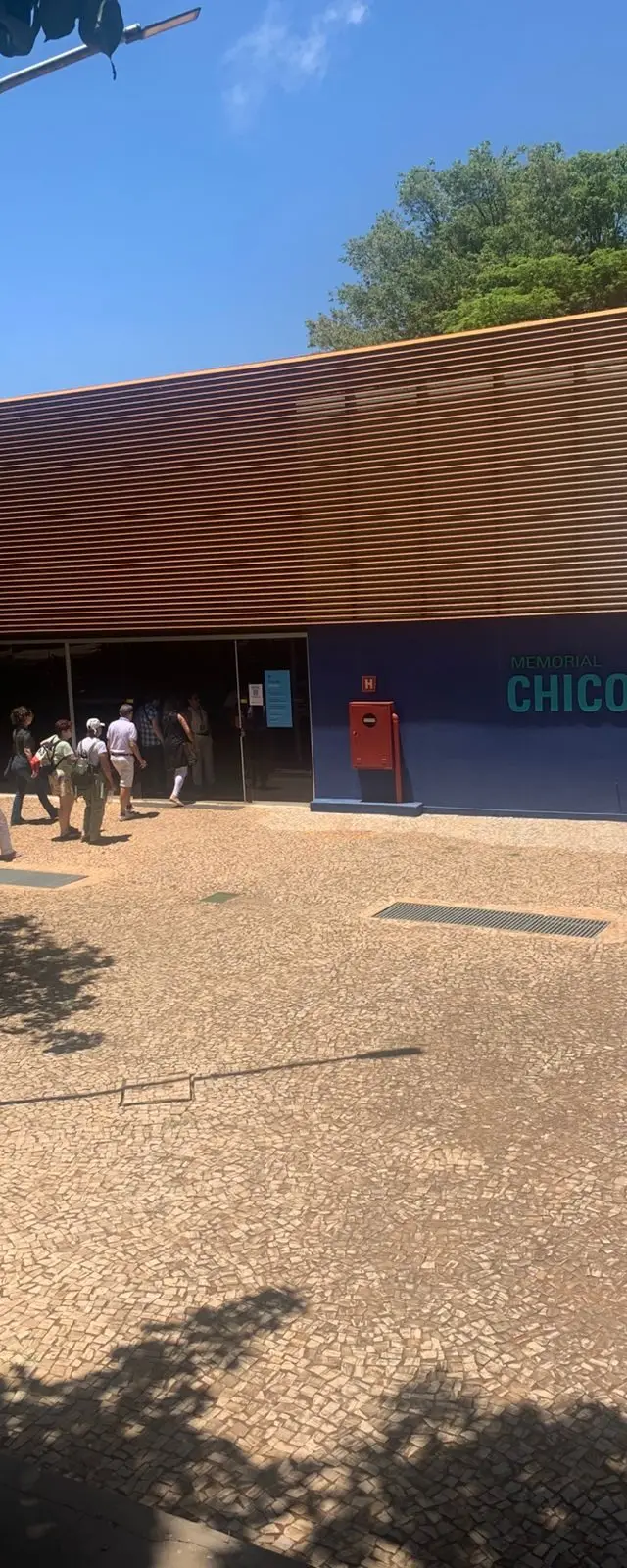
A large group needs arrangements in advance, because not every space receives visitors without notice. Two examples checked on 30 October 2026. The Espaço Cultural Chico Xavier in Pedro Leopoldo requires advance booking for all visits and, for caravans, asks you to book through the same channel and to email the list of names and the total number of participants. The Mansão do Caminho in Salvador reports on its website that the guided visit has free booking through the site itself. The Memorial Chico Xavier in Uberaba works with ticket reservations, and its channels give differing information on hours, which calls for checking before you go.
Moral of the story: the organiser needs to gather full names early, and the passenger list is a document that serves several places. Those who travel with an agency usually have this solved, but it is worth asking.
If it is anyone's first visit to a Spiritist house, the text on clothing, photos and conduct on a first visit helps, and what to pack for a Spiritist caravan answers the suitcase question.
Join an open departure, or close a group just for your centre?
There are two paths. The first is to book seats on a caravan that already has a date, and the centre's group travels with people from elsewhere. It is the simplest way when only a few people are going. On 30 October 2026, Guatambu's page shows a confirmed departure to the Triângulo Mineiro and Caldas Novas from 10 to 18 November 2026, from R$ 3,390, and a trip to Minas confirmed for April 2027, with dates and prices still being defined. Reservation uses a 10% deposit, with the balance paid in instalments until boarding. Prices and availability may change, so always confirm.
The second path is to close a trip just for the group. Guatambu says, on its page about coach charter for groups, that it serves closed groups, including Spiritist centres, as long as there are enough people to fill the coach; the page gives no minimum number or price. To request a quote, four pieces of information are needed: date, origin and destination, number of people and number of days. When the group already exists but does not want to build the itinerary, Guatambu builds the itinerary and brokers the coach, and the trip stays closed to that group only.
On either path, ask in writing for the cancellation conditions and what is included. A good conversation is one that is on record, and that protects the centre and the coordinator.
What to bring back to the centre
The part most often forgotten is the return. If the trip ended at the bus station and the conversation died there, the group lost half of what it lived. It works to agree, before leaving, on a meeting the week after arrival, one hour only, with three questions: what moved me, what do I want to study now, what can we do for the centre. A noticeboard with photos and accounts helps, as does reading aloud something someone wrote during the trip, and, for centres with a charity project, a concrete gesture inspired by what the group saw.
Travellers often return with a sense of having been in an atmosphere of calm and work. People who live Spiritism understand this as the natural effect of spending time in places where many people dedicated themselves to doing good. It is a perception and an understanding of faith, and each person returns with their own; we promise nothing beyond a well-cared-for itinerary and a well-served group.
If you want to talk about your group's trip
You have a centre, an idea, people willing. Message Guatambu on WhatsApp and tell us how many people there are, where they depart from and how many days the group can be away. You can also use the contact page. More departure options are on the Minas Espírita destination page (Portuguese).
Sources and consultation
Consulted on 30/10/2026: Guatambu Travel, Spiritist caravan from Porto Alegre; Guatambu Travel, day-by-day itinerary; Guatambu Travel, coach charter for groups; União Espírita Mineira, reopening of the Espaço Cultural Chico Xavier; Mansão do Caminho; Memorial Chico Xavier; Nosso Lar, FEB (index and preface, digital edition at O Consolador). The suggestions for organising the group are editorial planning criteria, not rules. The sense of atmosphere described is perception and Spiritist understanding, not measurement.