If you open Nosso Lar at the first page, before chapter 1, you will find a text by Emmanuel called "Novo amigo" ("New friend"). At the end of it, a short line: "Pedro Leopoldo, 3 de outubro de 1943" (3 October 1943). It is a detail that slips by while reading, and yet it is the most direct proof of where the book was born. In 1944 the Brazilian Spiritist Federation (FEB) published what would become the first volume of the collection "A Vida no Mundo Espiritual" (Life in the Spiritual World), and the date and place Emmanuel signed were already there, discreetly, for anyone who cared to read them.
That is the idea of this conversation: going back to the book with a map in hand. What Nosso Lar says, where it came from, and what is left of Pedro Leopoldo for those who want to go there.
A preface that asks for care
It is worth starting with the preface itself, because it says things we tend to forget. Emmanuel explains that the physician André Luiz will not be presented as a known author: anonymity, he says, is the child of understanding and love, and André had to "draw the curtain on himself" so as not to hurt beloved hearts still wrapped in illusion. He acknowledges that this is not the only book about life beyond the grave, but explains there was a wish to bring someone able to convey the value of personal experience, with the details needed to understand the order that governs the effort of the disincarnated who work.
Twice the text speaks directly to the reader. One is the warning that many will smile at certain passages, because the unfamiliar surprises in every age, and it recalls who would have smiled, years earlier, if told about aviation, electricity or radio. The other is the request that "every reader needs to analyse what he reads." That matters, because the reading the book proposes is not blind belief. It is study.
And there is the closing line, which many readers underline: Emmanuel says the Spiritist certainly needs "Spiritism" and "Spiritualism," but much more "Spirituality." If you keep only one sentence from the preface, keep that one.
The story, without spoiling it for those who have not read it
Nosso Lar has fifty chapters in the FEB edition. It begins with no introduction at all: André Luiz, a physician, wakes in regions of suffering, with no sense of time or space, convinced that he no longer belongs among the incarnate and yet still breathing. Whoever reads chapter 1, "Nas Zonas Inferiores" ("In the Lower Zones"), understands why so many keep that page. It is not only fright and darkness; it is a man looking at his own life and realising that, by his own measure, he was never a criminal, but that the "philosophy of the immediate" had absorbed him. He tallies everything he received and did not return, a home he closed to those in need, a family he trapped in selfishness.
Then comes the prayer that rescues him, the meeting with the minister Clarêncio, the arrival at the colony. And there the book becomes a kind of learning notebook. André meets Lísias, who accompanies him, the nurse Narcisa, Mrs. Laura. He learns how the city works: six Ministries, those of Regeneration, Assistance, Communication, Enlightenment, Elevation and Divine Union, the first four closer to the earthly spheres, the last two linked to the higher plane, because, as the book explains, the colony is a zone of transition. Clarêncio, by the way, is one of the Ministers of Assistance.
The ideas that stay after the last chapter
If the book were only the description of a city, it would not have lasted eighty years of reading. What stays are a few ideas that keep returning.
The first: death turns nobody into a saint or a condemned soul. It returns the person to himself. The preface says the greatest surprise of death is to place us face to face with our own conscience, and the rest of the book unfolds that sentence.
The second: work is the currency of everything. In chapter 22, "O Bônus-Hora" ("The Hour-Voucher"), Mrs. Laura explains that the bônus-hora is not exactly money but an individual service token that works as purchasing value: basic food and clothing belong to everyone, but those who make an effort earn privileges, and each worker must give at least eight hours of useful service a day. A first reading may look like a lesson in spiritual economics. The reading of someone who attends a Spiritist centre is different: nobody lives for free on mercy, but everybody can start from where they are. Chapter 27, "O Trabalho, Enfim" ("Work, at Last"), goes in that direction.
The third: the family is a school. The chapters on Lísias's home, the "notions of home," the family worship of chapter 48, show a spiritual life that runs through a set table, conversation in the living room, shared prayer. For anyone who has a Spiritist centre, this is a reminder that study does not end at the door of the house.
The fourth, and perhaps the most uncomfortable, comes in chapter 40, whose title says it all: "Quem Semeia Colherá" ("Whoever Sows Will Reap"). Action and consequence, a theme the series expands considerably in other volumes.
The message that opens the book
Right after the preface comes a page signed by André Luiz, the "Mensagem," and it is worth reading slowly. It opens with the sentence "life does not cease" and moves through a sequence of short equivalences: an existence is an act, a body is a garment, a century is a day, a death is a renewing breath. It is a summary of what follows, and also an invitation to lift the weight from the moment of death. Changing clothes, he says, does not settle the fundamental problem of enlightenment. Anyone who attends a Spiritist centre recognises the tone: no terror and no shortcuts, with the steadiness of someone who has walked the road and now teaches.
A series that unfolds
The first volume is only the beginning. The collection brings together thirteen books: from Os Mensageiros ("The Messengers," literally) to E a Vida Continua... (published in English as And Life Goes On), including titles many people know only by name, such as Missionários da Luz (published in English as Missionaries of the Light), Libertação ("Liberation," literally), Nos Domínios da Mediunidade ("In the Domains of Mediumship," literally) and Ação e Reação ("Action and Reaction," literally). In each one, André Luiz changes his vantage point and his subject: sometimes rescue services, sometimes the study of mediumship, sometimes the process of reincarnation and the justice of consequences. If we had to summarise what the series teaches about life after death, it would take a few lines: life continues and consciousness goes with it; work for good is what lifts us; mediumship is a responsibility, not a privilege; and every choice leaves a consequence that reincarnation offers a chance to redo. None of this is news to someone who studies Kardec. The novelty is in the form, because instead of a treatise we have a narrator who sees, asks, is astonished and makes mistakes, and that is why we recognise ourselves in him. Reading order is a topic for another conversation.
Some titles are available in other languages. In English the book circulates as Nosso Lar (one edition carries the subtitle Life in the Spirit World) and also as Astral City; in Spanish, as Nuestro Hogar.
Pedro Leopoldo, in person
Now the practical part. What is left, in Pedro Leopoldo, of the town where the book was written?
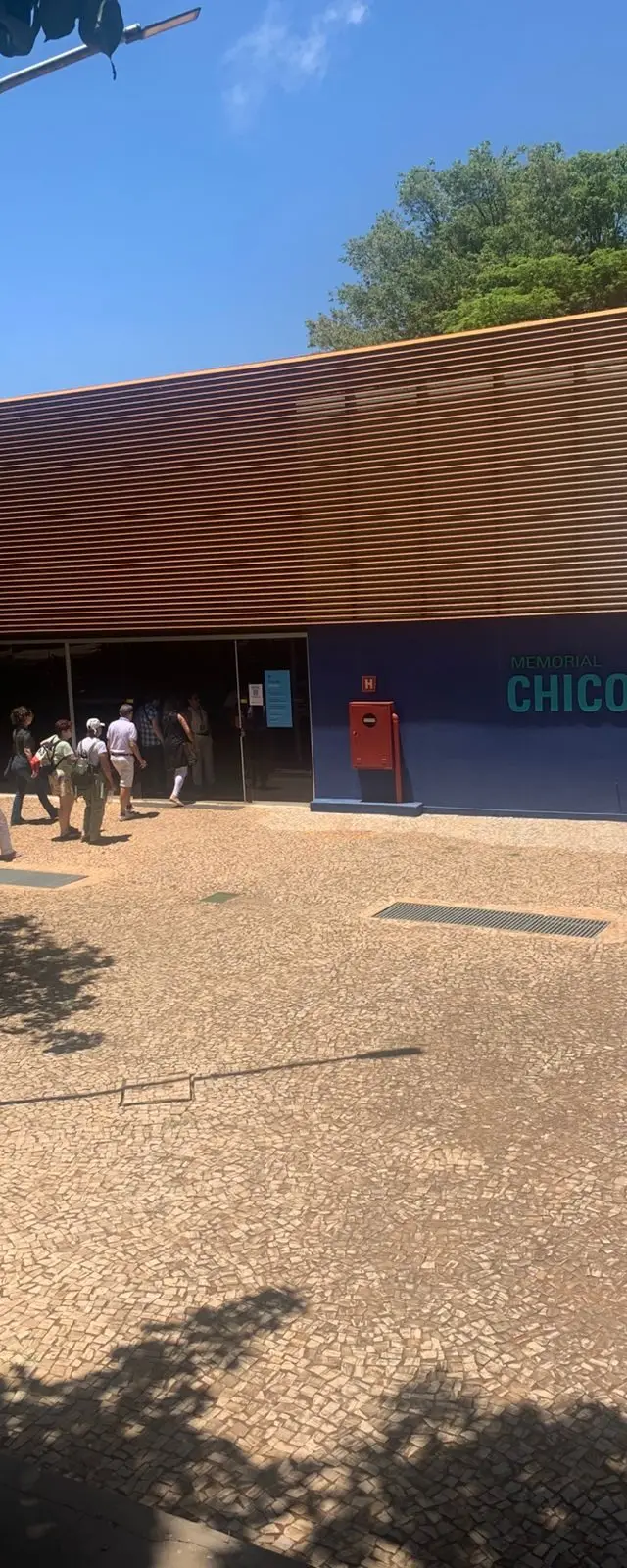
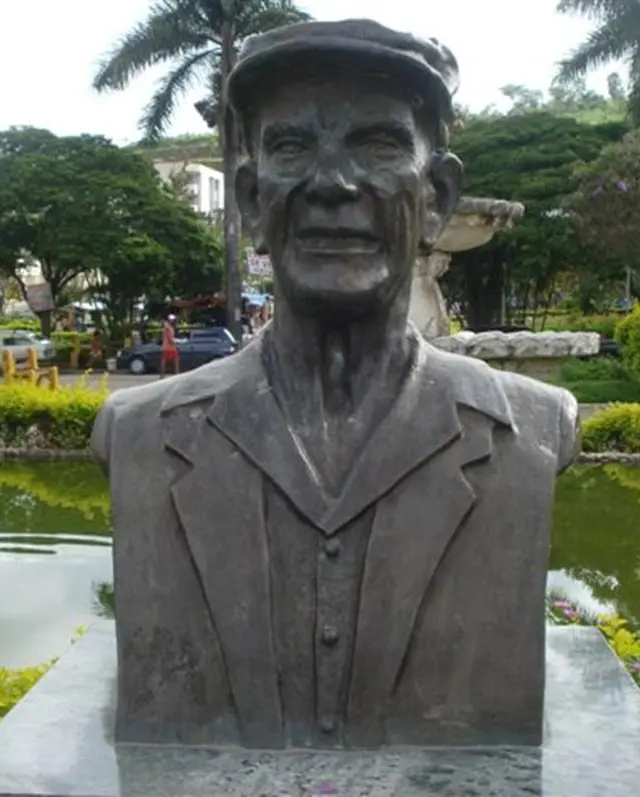
Chico Xavier was born there on 2 April 1910, and the FEB places his reunion with Emmanuel in July 1931. He lived in Pedro Leopoldo until 1959 and worked for about 25 years at the Fazenda Modelo, as a clerk-typist, according to UFMG (the Federal University of Minas Gerais). That is where the Espaço Cultural Chico Xavier now operates, reopened in March 2026 after a renovation by the União Espírita Mineira, which runs the visits together with UFMG. What UFMG describes is a collection with every book Chico published, plus biographies and translations of his work. Imagine what it means to walk into such a room: you see side by side the whole André Luiz collection, in covers and editions from decades apart, and you can picture the scale of the work done by someone who held a day job.
One important piece of information for organisers: according to the União Espírita Mineira, visits to the Espaço Cultural require advance booking and are led by the institution's guides. For caravans, the instruction is to book through the same channel and to email the list of names and the total number of participants. On the date of our check, the space was open Wednesday to Sunday, but hours change, so confirm before you go.
Another place in town is the house where Chico lived until he moved to Uberaba, now a memorial, according to a document of the Brazilian Federal Senate. There is also the Centro Espírita Luiz Gonzaga, which the same document says Chico founded on 21 June 1927. We found no current official information on visiting either of these two places, so we advise asking before you include them in an itinerary. If you want more about the town, we already have the text on Pedro Leopoldo, Chico Xavier's hometown and another on what to see in Pedro Leopoldo. To understand better how psychography works, see our text on Chico's letters and psychography.
What you can feel there
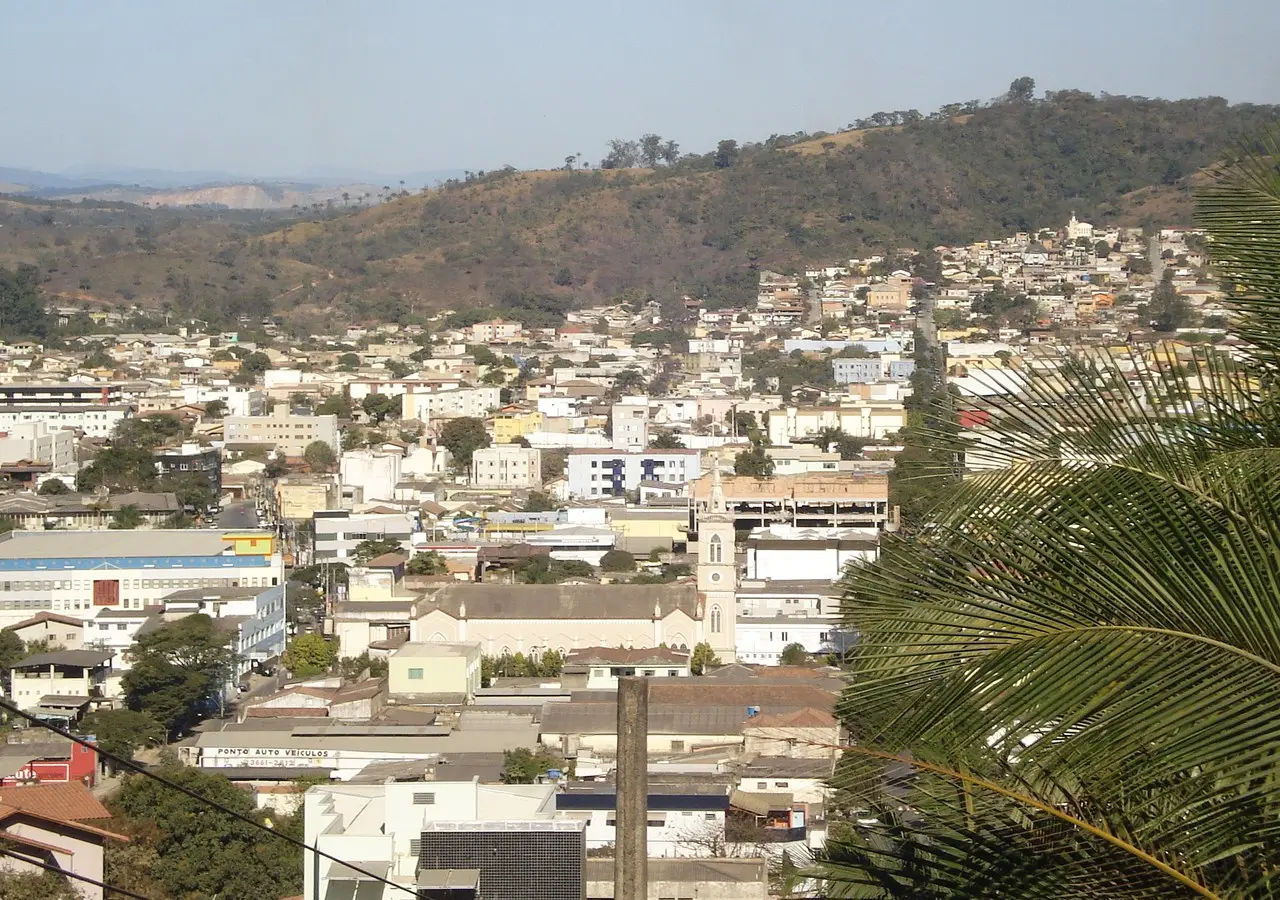
A small town, light traffic, the atmosphere of the Minas countryside. Visitors often speak of the silence and the calmer rhythm, and for someone who reads André Luiz it seems natural to associate this with the origin of a body of work made without haste or spotlight. It is a perception, not a measured truth: what each person feels depends on the day, the state of mind, the baggage carried. But there is a difference many people recognise: reading "Pedro Leopoldo, 1943" in a book's preface is one thing; being in the town where someone wrote it is another.
Going with Guatambu
Pedro Leopoldo is part of some Guatambu itineraries and not others: each departure has its own programme. On 30 October 2026, the pages for Spiritist caravans from Porto Alegre and the Minas Espírita destination (both in Portuguese) show a confirmed departure to the Triângulo Mineiro, from 10 to 18 November 2026, and a trip to Minas confirmed for April 2027, the latter with dates and itinerary still being defined. The Triângulo itinerary described on those pages goes through Uberaba, Sacramento and Araxá. If Pedro Leopoldo is the stop you want, the right question is whether the departure you have in mind includes it.
Message us on WhatsApp and tell us what you are looking for. We will talk it through, no commitment.
Sources and consultation
Consulted on 30/10/2026: Nosso Lar, Francisco Cândido Xavier by the Spirit André Luiz, FEB (preface "Novo amigo," signed by Emmanuel in Pedro Leopoldo, 3/10/1943; index and chapters 1, 22, 27, 40 and 48, digital edition at O Consolador); UFMG, Espaço Cultural Chico Xavier; União Espírita Mineira, reopening of the Espaço Cultural; União Espírita Mineira, biography of Chico Xavier; Brazilian Federal Senate, document on Chico Xavier; Guatambu Travel, Spiritist caravan. The impression of atmosphere is perception and Spiritist understanding, not measurement. Hours, bookings and dates must be confirmed through official channels.