When we study the history of Spiritism in Brazil, we almost always study it in a straight line: dates, names, books. It works for an exam and for a study circle. What the straight line does not show is that this history has addresses. There is a school in Sacramento, a small town in Minas Gerais where a teacher became a medium. A farm building in Pedro Leopoldo, from which came a body of work that crossed the country. A city in the Triângulo Mineiro, Uberaba, where one man spent more than four decades receiving people. And a district of Salvador, where an orphanage became one of the largest social works of the movement.
It is worth tracing that history through places, and that is what we propose here, with the dates we managed to check against sources and honest notes where a source is weak.
Before Minas: Paris, Salvador and Rio
The starting point is outside Brazil. The Spirits' Book (O Livro dos Espíritos), by Allan Kardec, dates from 1857 and begins the codification. In Brazil, the first Kardec texts in Portuguese appear in periodicals in the 1860s, and in 1865, in Salvador, Luís Olímpio Teles de Menezes founds the Grupo Familiar do Espiritismo, recorded by Spiritist historiography as the first meeting of its kind in the country. That information comes from a secondary source, so treat it as a historical reference and not as a document. Notice that the movement's history in Brazil begins in Bahia, and it is nice that one of the endings of this route, Divaldo Franco's, comes back to Salvador.
In January 1884, in Rio de Janeiro, the Brazilian Spiritist Federation (FEB) is born, founded on 2 January by Augusto Elias da Silva, who had been publishing the magazine Reformador since the previous year, according to the FEB itself. Later, in 1895, Bezerra de Menezes takes over the presidency and gives the movement the Gospel-centred orientation it would keep. The FEB has its historic seat in Rio, but much of what interests us in this text happened in the interior of Minas and in Bahia.
Sacramento, 1907: the teacher who founded a school
Eurípedes Barsanulfo was born on 1 May 1880 in Sacramento, and was a teacher, journalist and town councillor. In 1902 he co-founded the Liceu Sacramentano. After he began working as a medium and devoting himself to Spiritism, the Liceu ran into difficulties, students left, and the school was transformed: on 31 January 1907, according to the bibliography we consulted, the Colégio Allan Kardec was born. It offered free schooling to poor children and orphans and adopted methods that rejected corporal punishment. Academic research at the Federal University of Uberlândia treats the school as the first regular Spiritist school in Brazil and places its first period of operation between 1907 and 1918. (The expression "first in the world" appears in popular texts, but the documentation we consulted more safely supports the claim of being first in Brazil.)
Eurípedes died in Sacramento on 1 November 1918, aged 38, during the Spanish flu epidemic. For the visitor, Sacramento is where Brazilian Spiritism showed itself, above all, as education and service to the people. A Spiritist tourism route organised with the support of the Minas Gerais government mentions, in town, the Museu Eurípedes Barsanulfo and the Gruta dos Palhares. To understand the man, we have the text on Eurípedes Barsanulfo, the teacher of the Triângulo and the guide to what to see in Sacramento.
Pedro Leopoldo, 1910 to 1959: the medium and the work
While Eurípedes was still teaching in Sacramento, on 2 April 1910, Chico Xavier was born in Pedro Leopoldo. The FEB records 8 July 1927 as the start of his mediumistic mandate, and his reunion with the guide Emmanuel in late July 1931. In 1932 the FEB publishes Parnaso de Além-Túmulo, the first of a long list of works. In 1944 comes Nosso Lar, whose preface, signed by Emmanuel on 3 October 1943, names the town as its place of origin.
The Chico of this phase is a civil servant: he worked about 25 years at the Fazenda Modelo, as a clerk-typist, according to UFMG, and that is where the Espaço Cultural Chico Xavier now operates, reopened in 2026 with booked visits. If the book born in this period interests you, we wrote a whole conversation on Nosso Lar and the André Luiz series in Pedro Leopoldo.
Uberaba, 1959 to 2002: where the work met the people
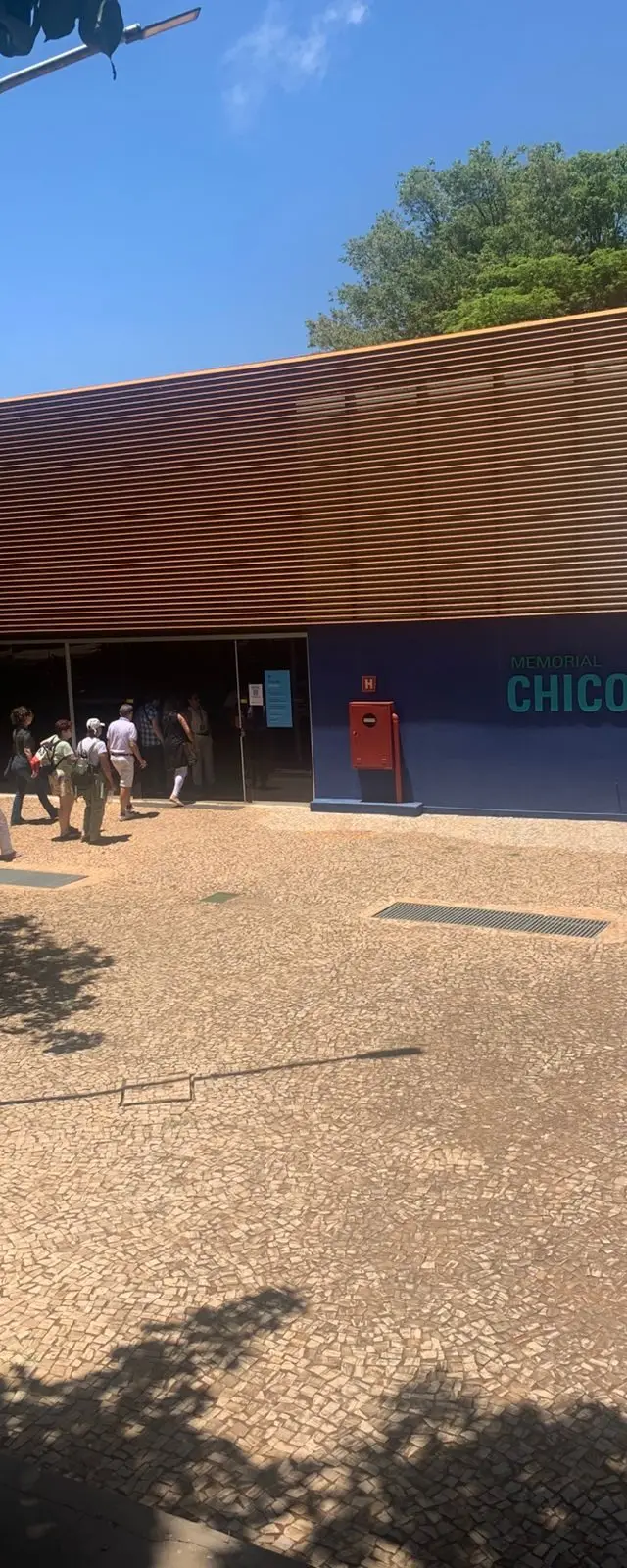
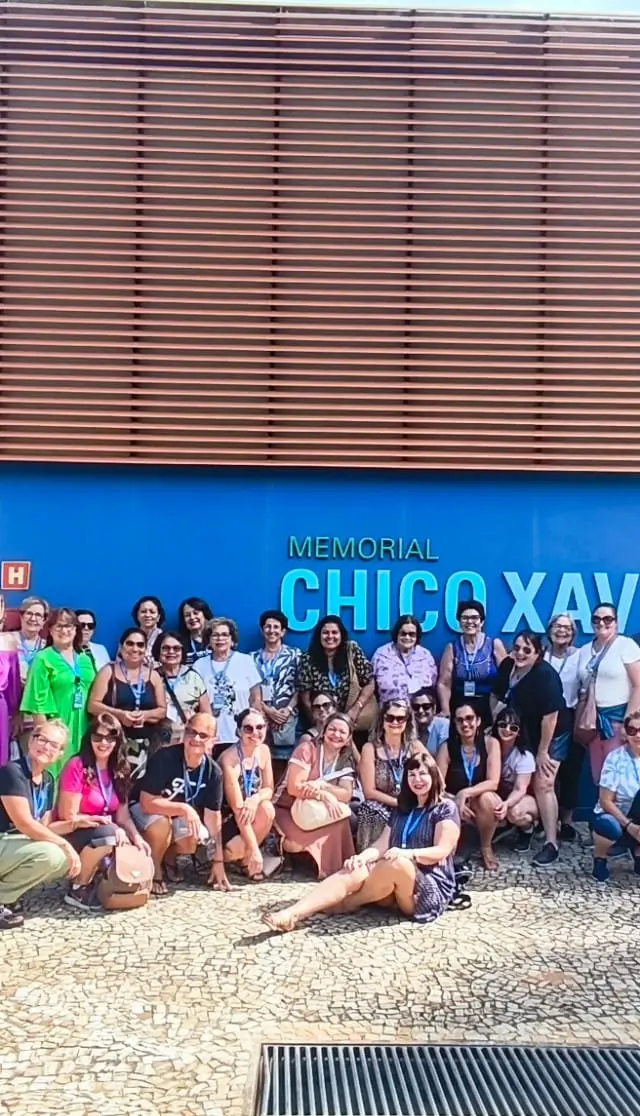
In 1959 Chico moves to Uberaba, where he would live until his death on 30 June 2002. With companions he founded the Comunhão Espírita Cristã, where he worked from 1959 to 1975, and afterwards the Casa da Prece, according to the Uberaba city government. In the city today, the Memorial Chico Xavier, reopened in 2024, has an exhibition on three floors, and the Casa de Memórias e Lembranças is part of the organic museums route. On the move itself, the text Why Chico Xavier lived in Uberaba gives the context.
Here the movement changes scale. If in Pedro Leopoldo the story is about work and recollection, in Uberaba it is about welcoming crowds, caravans, queues. Uberaba is the chapter of assistance.
Salvador, 1927 to 2027: from a school to a whole neighbourhood
The circle closes in Bahia. Divaldo Pereira Franco was born in Feira de Santana on 5 May 1927. On 7 September 1947 the Centro Espírita Caminho da Redenção was founded in Salvador by him, by Nilson de Souza Pereira and other companions. On 15 August 1952 the Mansão do Caminho was born, conceived at first as a home for orphaned children. Divaldo died on 13 May 2025, aged 98, at the Mansão itself.
Today the Mansão do Caminho reports on its website that it runs schools from nursery to high school, free healthcare and social action for local families, as well as doctrinal activities, and it offers a guided visit with free booking. In 2027 it will be one hundred years since his birth, and the date is at the centre of a gathering in Salvador. Guatambu's page on the Divaldo Franco Centenary, the Sower of Stars (Portuguese) reports the event from 30 April to 2 May 2027, with dates and prices still to be confirmed. On his life, the text Divaldo Franco: life, work and legacy of the Mansão do Caminho has the summary.
Which reading to bring to each stop
If the idea is to travel with history in your head, it helps to pair a reading with each place. For Sacramento, a biography of Eurípedes or any text on Spiritist education your group already has at home. For Pedro Leopoldo, Nosso Lar itself, which has the town's name in its preface and is the entry point to the André Luiz series. For Uberaba, a work in which charity sits at the centre, and there are many to choose from. For Salvador, something by Joanna de Ângelis or Divaldo's biography. It is not a rule; it is only a way of turning the coach into a study room and arriving in each city with a question.
A map in four tones
Look at the whole and you will see that each place shows one face of the movement: Sacramento is education, Pedro Leopoldo is the written work and a medium in formation, Uberaba is assistance and welcome, Salvador is social work on a large scale. None of them is "the" history of Spiritism; together they help avoid reducing everything to a single author. And there is a detail students tend to notice: in all of these cities the story starts with small people, in a small place, with few resources, doing something that seemed modest.
One caution from us: no source links a visit to these cities to any guaranteed spiritual "effect." What visitors usually describe is an atmosphere of calm and seriousness, and people who live Spiritism usually understand it as the reflection of decades of work for others. It is perception and Spiritist understanding, and each person feels it in their own way.
How to make this journey
Anyone planning a route like this has two options: study first and go with the timeline in mind, or go first and study afterwards. The second brings more emotion, the first more meaning. For a study group, we recommend the first.
Guatambu departs from Porto Alegre with a guide and travel agent accompanying the group. On 30 October 2026, the Spiritist caravan page (Portuguese) shows a confirmed departure to the Triângulo Mineiro and Caldas Novas, from 10 to 18 November 2026, with Uberaba and Sacramento on the itinerary, and a trip to Minas confirmed for April 2027, with dates still being defined. The Divaldo Franco Centenary in Salvador appears as "coming soon," with dates and prices to be confirmed. See the options on the Minas Espírita destination page (Portuguese).
If you would like to build a route combining these places, talk to us on WhatsApp and tell us what is missing from your timeline.
Sources and consultation
Consulted on 30/10/2026: FEB, Nossa História (foundation on 2/1/1884 and the magazine Reformador); União Espírita Mineira, biography of Chico Xavier; Federal University of Uberlândia, dissertation on Eurípedes Barsanulfo and the Colégio Allan Kardec (1880 to 1918); Mansão do Caminho, official website; Uberaba city government; UFMG, Espaço Cultural Chico Xavier; Wikipedia (only as a lead, for 1865, for 31/1/1907 and for dates of Divaldo Franco). Where a source is secondary, the text says so.