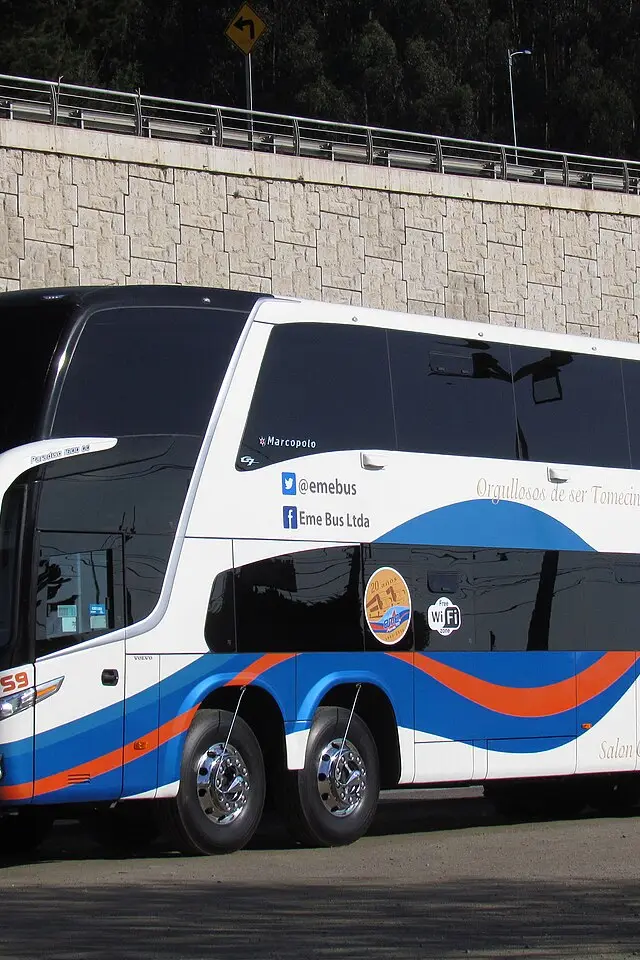
Close your eyes for a second and imagine. On one side, the green vineyards of Mendoza, in Argentina, bathed in sunshine. On the other, the skyscrapers of Santiago, in Chile. And between the two, a wall of rock and snow almost seven thousand metres high waiting to be crossed. That is exactly the route, and the best part is that you do it all from the comfort of your seat, with your nose pressed to the window. Crossing the Andes by coach is one of the most unforgettable experiences in South America, and it is much more within your reach than you might think. Sit back and get comfortable, because we are going to tell you everything that awaits you on this journey, and why the Andes steal the show from start to finish.
What is the longest mountain range in the world?
The Andes, in South America, are the longest continental mountain range on the planet, without exaggeration. They stretch for about 7,000 kilometres along the western edge of South America, stitching together seven countries, from Venezuela to the southern tip of Chile and Argentina. And do you know how all this grandeur came about? From a slow and colossal clash between tectonic plates: the Nazca plate, deep in the Pacific Ocean, dives beneath the South American plate in a process called subduction. It took millions of years of pushing and shoving to wrinkle the Earth's crust and raise these peaks that parade past you, each more imposing than the last.
And the tallest of them all lives right in the province of Mendoza: Aconcagua, at 6,961 metres, is the highest mountain in the Americas and the highest outside Asia. The road does not climb to the summit, of course, but keep this in mind: on clear days, there are stretches of the crossing where this giant, covered in eternal snow, suddenly appears in the landscape. When that happens, nobody on the coach stays quiet.
Why are the Andes essential to Mendoza, in Argentina?
Mendoza, an Argentine province at the foot of the Andes, lies in a semi-desert: it rains little, the sun beats down, and yet the region is one of the wine capitals of the world. How is that possible? The secret is melting high up above. The snow that builds up in the Andes during winter melts in spring and summer, a phenomenon the Argentines fondly call deshielo, and flows down in rivers that feed a system of irrigation channels inherited, in part, from the Indigenous peoples. It is this water born in the mountains that keeps the Malbec vineyards alive, along with the olive trees and the tree-lined avenues that cast cool shade over the city streets.
On the other side of the range, the story repeats itself. The mountains hold back the clouds, rule the climate, fill the reservoirs and draw people from everywhere to the snow and adventure. From the Uspallata valley, in Mendoza, to the Chilean ski resorts, almost the entire economy depends, one way or another, on this immense column of rock. Understanding this is magical: from then on, you stop seeing just a pretty scene through the window and begin to see the source of water, food and work for millions of people. The mountain is not the backdrop, it is the protagonist of life here.
What is the route of the Andes crossing between Mendoza and Santiago?
The road linking Mendoza, in Argentina, and Santiago, in Chile, is Ruta Nacional 7 on the Argentine side, which becomes Ruta 60 as soon as you enter Chile. At the heart of it all is the Paso Internacional Los Libertadores, the most used border crossing between Mendoza and Santiago. And here is a delightful detail: the coach actually crosses the border through a tunnel cut into the rock, at about 3,200 metres above sea level, the famous Cristo Redentor tunnel. Yes, you travel from one country to another literally through the inside of the mountain.
Along the way, three landmarks call for your closest attention, and preferably your camera at the ready:
- The Uspallata valley, with earthy colours so cinematic that they have served as the setting for films set in Tibet. Believe it.
- The Puente del Inca, a natural stone bridge sculpted by mineral-rich thermal waters, which have painted the rock in orange tones over the centuries. It looks like a painting.
- The view of Aconcagua, from a viewpoint just at the entrance to the provincial park that bears its name.
And then, on the Chilean side, comes the most breathtaking part of the whole journey.
Los Caracoles: a descent to make you shiver (in a good way)
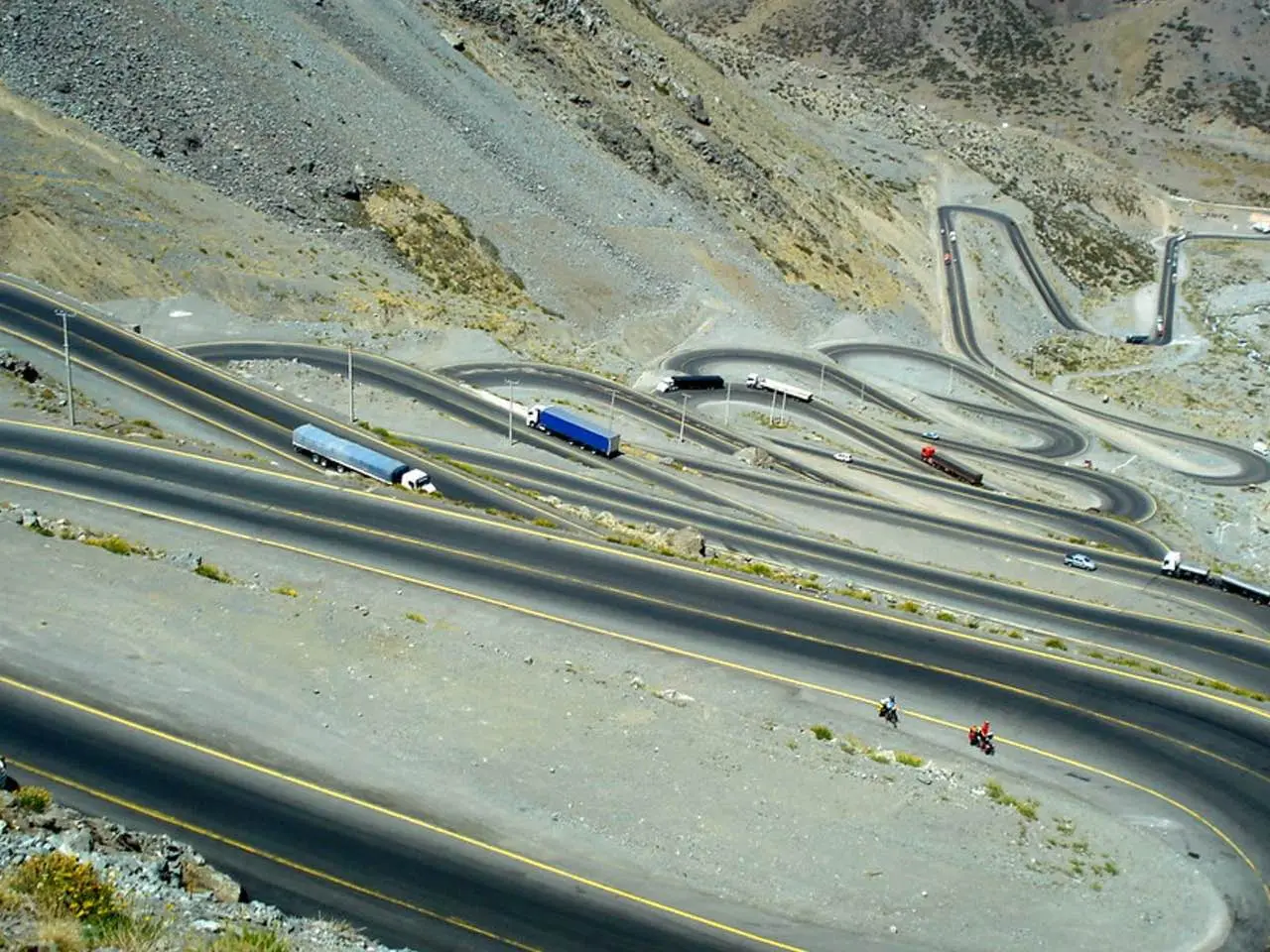
Just after the border, the road simply drops off the mountain in a series of very tight bends, stacked one on top of another like a giant staircase carved into the slope. This is the stretch nicknamed Los Caracoles ("the snails"), because of the spiral shape of the turns. In just a few kilometres, the road descends hundreds of metres through dozens of hairpin bends. It is enough to make your heart beat faster.
Seen from above, you would swear it is impossible for a coach to get through, but you can trust that the drivers who run this route know every bend by heart, like the way home. The result is one of the most spectacular views in the whole of the Andes, with the road winding through the landscape like a ribbon while the green slowly returns as you descend towards Santiago. Keep your phone to hand: this is, guaranteed, the photo that will earn the most "wow" in the family group chat.
What is the Cristo Redentor de los Andes?
The Cristo Redentor de los Andes is a statue standing at the top of the old border pass between Argentina and Chile, well above today's tunnel, at about 3,832 metres above sea level. The bronze statue, almost seven metres tall, was unveiled on 13 March 1904 to celebrate a fine victory, the peaceful settlement of an old boundary dispute between Argentina and Chile. And here is a detail that brings a lump to the throat: the pieces went up by train as far as they could and, from there on, were hauled by mules to the top of the pass, where the statue was assembled facing the border line, blessing both sides.
The inscription on the monument says that these mountains will crumble into dust before Argentines and Chileans break the peace they swore at the feet of Cristo Redentor.
In summer, when the snow gives way, you can go up to the monument along a dirt road and stand right beside it. In winter, it is usually cut off by snow, utterly solemn, and the crossing continues through the tunnel, further below, which has its own charm too.
San Martín and the history that crossed the mountains
Long before coaches, tunnels and reclining seats, one of the boldest episodes in all of South American independence passed through these same mountains. In 1817, General José de San Martín led the Army of the Andes on an epic crossing of the range to free Chile from Spanish rule. Stop and picture the scene: thousands of soldiers, horses and cannons crossing the icy passes in the 19th century, with no road and no tunnel, on sheer grit. That is why the border pass is called "Los Libertadores", and when you cross it, nicely warm in your seat, you will feel that every kilometre holds that heroic memory.
So you can enjoy it without worry
A few tips from those who have made the journey, so you can enjoy it all with a light heart:
- Altitude: the highest point on the road is around 3,200 metres. The great majority of people feel, at most, slight tiredness or a mild headache. Drink plenty of water, take it easy and avoid very heavy meals that day. Simple as that.
- Documents: this is a genuine international border. Keep your travel document to hand and follow the guide's instructions at customs. The stop for checks takes a little while, and that is perfectly normal, it is part of the adventure.
- Layered clothing: the temperature drops sharply up high, even at the height of summer. A jacket that is easy to reach makes all the difference at photo stops. Trust us.
- Winter: between June and September, the pass may occasionally close because of snow or strong wind. Guided itineraries already allow for this possibility and adjust the schedule without stress.
- Camera and motion sickness: if you are sensitive to bends, sit closer to the front to take on Los Caracoles calmly, and always keep your camera nearby, because the best views appear out of nowhere, when you least expect them.
In the end, crossing the Andes is much more than leaving one country and arriving in another. It is understanding, in a few hours on the road, how a single mountain range can shape entire cities, wines, stories and borders. And making this journey in a group, alongside people who know every bend and every stop, turns the crossing into a safe trip, full of meaning and good laughs, leaving you free, completely free, to simply look out of the window and be enchanted. How about it? Discover our expeditions or go back to the home page and start planning the trip you will tell everyone about.