The law of society in Spiritism: why the doctrine condemns isolation
The law of society is the seventh of the ten moral laws of Spiritism. It appears in chapter VII of Part Three of O Livro dos Espíritos (The Spirits' Book), in questions 766 to 775, and it is the shortest chapter in the series, with ten questions. In return, it is one of the most forthright: it states that living in society is a natural law, and treats voluntary isolation as a moral failing, not as a virtue.
Guatambu Travel organises Spiritist caravans departing from Porto Alegre for the Triângulo Mineiro, and this is the law that explains why the doctrine is organised around meetings, casas espíritas (Spiritist centres) and groups rather than solitary practice. Here we describe what the doctrine states, giving the question number for each quotation for anyone who wants to check.
Why is living in society a natural law?
Because the book sees proof of our purpose in human faculties themselves: “Certainly. God made man to live in society. He did not give him speech and all the other faculties needed for social life for nothing.” (O Livro dos Espíritos, question 766)
Absolute isolation is classed as contrary to this law: “Without doubt, since men seek society by instinct and all must contribute to progress, helping one another.” (O Livro dos Espíritos, question 767)
And the underlying reason is progress, which the book considers impossible alone: “Man must progress. Isolated, this is not possible for him, as he does not have all the faculties. He lacks contact with other men. In isolation, he becomes brutish and withers.” (O Livro dos Espíritos, question 768)
But what about people who simply like living alone?
The book does not accept personal taste as a justification, and answers with an uncomfortable comparison: “Selfish satisfaction. There are also men who find satisfaction in drunkenness. Does that deserve your approval?” (O Livro dos Espíritos, question 769)
The criterion, once again, is usefulness to others: “A life by which a man condemns himself to be useful to no one cannot please God.” (O Livro dos Espíritos, question 769)
As for those who withdraw to escape contact with the world, the answer takes two words: “Double selfishness.” (O Livro dos Espíritos, question 770)
And when it is argued that retreat would be a painful expiation, the book offers another standard of measure: “Doing more good than harm is the best expiation. By avoiding one evil, the one who isolates himself for that reason falls into another, for he forgets the law of love and charity.” (O Livro dos Espíritos, question 770)
It is the same criticism that appears in the law of worship against a purely contemplative life, and in the law of conservation against useless mortifications.
Is there any retreat the doctrine approves of?
There are two, and the book distinguishes them clearly. The first is that of those who withdraw in order to serve: “These rise by lowering themselves. They have the double merit of placing themselves above material pleasures and of doing good, obeying the law of labour.” (O Livro dos Espíritos, question 771)
The second is that of those who need silence in order to work: “This is not the absolute withdrawal of the selfish. These do not isolate themselves from society, since they work for it.” (O Livro dos Espíritos, question 771)
And the vow of silence?
The book separates quiet reflection, which it approves of, from the vow, which it rejects. On the usefulness of silence, the answer is favourable when it serves reflection. On the vow itself, the verdict is four words: “The vow of silence, however, is folly.” (O Livro dos Espíritos, question 772)
The general principle behind the rejection holds for the whole chapter: “God condemns the abuse and not the use of the faculties he granted him.” (O Livro dos Espíritos, question 772)
What does the doctrine say about family?
The chapter closes with family ties, answering those who argue, from animal behaviour, that family is merely a social convention. The book separates the two cases: “Animals live a material life and not a moral one. The mother's tenderness for her children has as its principle the instinct of preservation of the beings she has given birth to.” (O Livro dos Espíritos, question 773)
And it states the difference in destiny: “There is something more in man, beyond physical needs: there is the need to progress. Social ties are necessary for progress, and the closer ties of family tighten the former. That is why the latter constitute a Law of Nature.” (O Livro dos Espíritos, question 774)
Asked what would happen if these ties loosened, the answer takes five words: “A resurgence of selfishness.” (O Livro dos Espíritos, question 775)
Where to read this law for yourself
The whole chapter is in O Livro dos Espíritos, Part Three, chapter VII, questions 766 to 775, divided into two sections: the need for social life, and a life of isolation and the vow of silence.
The book is available as a PDF, free of charge, in the downloads area of the Federação Espírita Brasileira.
Why is this law better understood by travelling in a group?
The chapter says that social life is a law of nature and that isolation runs against it. Travelling with forty people who study the same subject is a practical demonstration of this. Guatambu Travel operates the Spiritist caravan to Minas Gerais departing from Porto Alegre, described on the caravan landing page.
And if the group already exists, the route is different. A Spiritist centre, a study group or a large family that wants to take its own people does not need to buy single seats: Guatambu Travel arranges the coach hire through partner operators, without its own fleet, and builds the itinerary for that closed group. How this works, what the law requires of the operator and how to check the company is explained in bus charter for groups. Anyone organising a trip in another state and needing support in Rio Grande do Sul will find the equivalent in ground handling for groups.
Keep reading
This text is part of a series on the ten moral laws of Spiritism, published by Guatambu Travel.
- The ten moral laws of Spiritism: what they are and what each one says, the page that opens the series
- The law of worship in Spiritism, on prayer, outward worship and the contemplative life
- The law of justice, love and charity, identified by the book as the most important of the ten
- Allan Kardec and Spiritism: the doctrine explained in plain language, the starting point for anyone new to the subject
- How to behave in a Spiritist centre, on Mundo a Passeio
- Spiritist caravan departing from Porto Alegre, how the trip, boarding and booking work
- Photos of the Minas Espírita caravan, July 2026, the group's album in Uberaba, Sacramento, Araxá and Conquista
Sources
- KARDEC, Allan. O Livro dos Espíritos. Translated by Guillon Ribeiro. Brasília: Federação Espírita Brasileira, 93rd edition (Historical Edition), 2026. ISBN 978-85-7328-728-8. Part Three, chapter VII, questions 766 to 775. French original: Le Livre des esprits, Paris, 1857.
- Federação Espírita Brasileira, downloads area for the works of Allan Kardec: https://febnet.org.br/categorias-download/obras-kardec-basicas/ Source: https://febnet.org.br/_downloads/o-livro-dos-espiritos/, accessed 11 September 2026.
All quotations in this text were checked question by question against the edition cited above.
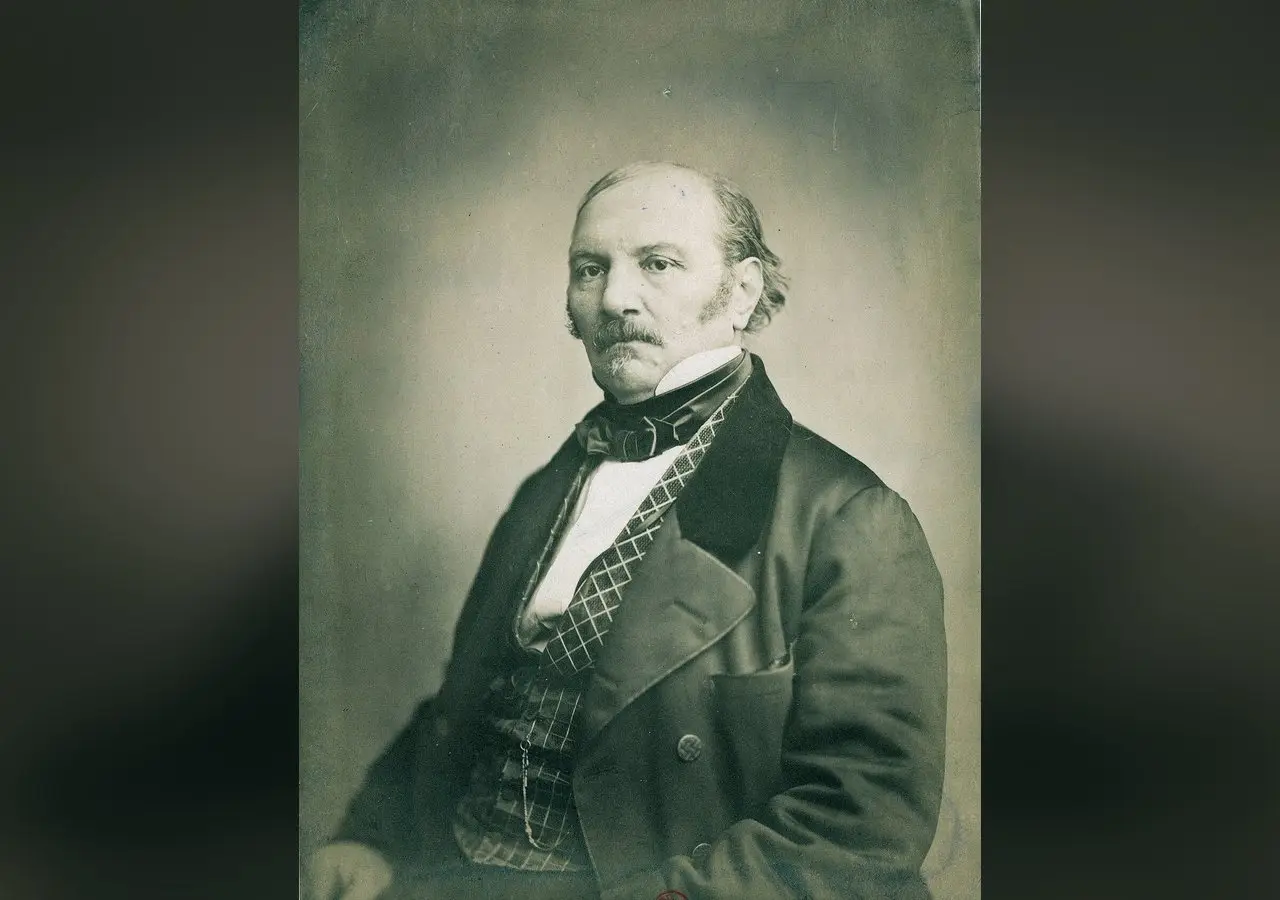
Cover image: photographic portrait of Allan Kardec, before 1870, public domain, collection of the National Library of France (Gallica), via Wikimedia Commons, resized image (https://commons.wikimedia.org/wiki/File:Photo_Kardec.jpg).