The law of liberty in Spiritism: free will, fatality and the hour of death
The law of liberty is the tenth of the ten moral laws of Spiritism. It sits in chapter X of the third part of O Livro dos Espíritos (The Spirits' Book), questions 825 to 872, and is the longest chapter in the series, with 48 questions. It is here that the doctrine faces the hardest subject of all: whether destiny exists, and where human liberty stands if it does.
Guatambu Travel organises Spiritist caravans departing from Porto Alegre for the Triângulo Mineiro. Here we describe what the doctrine states, giving the question number for each quotation for anyone who wishes to check.
Is there absolute liberty?
No, and the reason is living together: “No, because we all need one another, the small as well as the great.” (O Livro dos Espíritos, question 825)
The only situation in which it would exist would be complete isolation: “In that of the hermit in the desert. As soon as two people are together, there are reciprocal rights between them that they must respect; so neither of them enjoys absolute liberty.” (O Livro dos Espíritos, question 826)
But respecting the right of others does not cancel the right over oneself: “Not at all, since this is a right that comes from nature.” (O Livro dos Espíritos, question 827)
What does the book say about slavery?
This is one of the most explicit passages in the whole codification, and it was written when slavery was still legal in several countries, Brazil among them: “All absolute subjection of one man to another man is contrary to the Law of God. Slavery is an abuse of force. It disappears with progress, as all abuses will gradually disappear.” (O Livro dos Espíritos, question 829)
The book rejects the excuse of custom: “Evil is always evil, and no sophistry can make a bad action good.” (O Livro dos Espíritos, question 830)
And it makes no exception even for the master who treats his slaves well: “I say that these understand their interests better.” (O Livro dos Espíritos, question 832)
Freedom of thought and of conscience
On thought, the book states that it is the one entirely free territory: “In thought, man enjoys unlimited liberty, for there is no way to fetter it. Its flight may be stopped, but not annihilated.” (O Livro dos Espíritos, question 833)
Freedom of conscience is derived from this: “Conscience is an intimate thought, which belongs to man, like all other thoughts.” (O Livro dos Espíritos, question 835)
And the book says what results from restricting it: “Compelling men to act in disagreement with their way of thinking, making them hypocrites. Freedom of conscience is one of the characteristics of true civilisation and of progress.” (O Livro dos Espíritos, question 837)
On respecting the beliefs of others, the criterion is the effect and not the content: “Every belief is respectable when sincere and conducive to the practice of good. Beliefs that lead to evil are to be condemned.” (O Livro dos Espíritos, question 838)
On converting someone by force: “Certainly you can, and even should; but teach, following the example of Jesus, using gentleness and persuasion and not force” (O Livro dos Espíritos, question 841).
And there is a criterion for recognising a good doctrine, which the book applies even to itself: “It will be the one that makes the most good people and the fewest hypocrites, that is, through the practice of the law of love in its greatest purity and its widest application.” (O Livro dos Espíritos, question 842)
The same tolerance guides visits by people of other religions to Spiritist houses (casas espíritas), discussed in how to behave in a Spiritist house.
What is free will for Spiritism?
The book derives it from the liberty to think: “Since he has the liberty to think, he has equally that to act. Without free will, man would be a machine.” (O Livro dos Espíritos, question 843)
On innate tendencies that would push towards error, the answer preserves responsibility: “There is, however, no irresistible pull, once one has the will to resist.” (O Livro dos Espíritos, question 845)
And drunkenness is no excuse: “No, because it was voluntarily that the drunkard deprived himself of his reason, to satisfy brutish passions. Instead of one fault, he commits two.” (O Livro dos Espíritos, question 848)
Responsibility, however, is proportional to understanding, and so it grows with enlightenment, as the law of progress also states.
Does destiny exist in Spiritism?
It does, but in a restricted sense, and this is the central answer of the chapter: “Fatality exists solely through the choice the Spirit made, on incarnating, of this or that trial to suffer. By choosing it, it instituted for itself a kind of destiny, which is the very consequence of the position in which it finds itself placed.” (O Livro dos Espíritos, question 851)
And the book warns against the lazy use of the idea: “Yet here again you put down to destiny what is most often merely the consequence of your own faults.” (O Livro dos Espíritos, question 852)
On someone who commits a crime, the book denies that it was written: “No. By choosing a life of struggles, he knows he will have the opportunity to kill one of his fellows, but does not know whether he will do so, since the crime will almost always be preceded, on his part, by the deliberation to commit it.” (O Livro dos Espíritos, question 861)
This distinction between the chosen trial and the deliberate act is the same one that underpins what the doctrine says about murder in the law of destruction.
Is the hour of death fixed?
This is the only point at which the book admits fatality in the ordinary sense of the word: “Fatal, in the true sense of the word, only the instant of death is. When that moment arrives, in one form or another, you cannot escape it.” (O Livro dos Espíritos, question 853)
Even so, it does not conclude from this that taking care of oneself is pointless: “No, since the precautions you take are suggested to you in order to avoid the death that threatens you. They are one of the means employed so that it does not occur.” (O Livro dos Espíritos, question 854)
And it gives the scare a purpose: “The fact that your life is put in danger is a warning that you yourself desired, so as to turn away from evil and become better.” (O Livro dos Espíritos, question 855)
On those who sense their own death and fear it less, the explanation is one of perspective: “It is man who fears death, not the Spirit. One who senses it thinks more as a Spirit than as a man. He understands it to be his liberation and awaits it.” (O Livro dos Espíritos, question 858)
Why do we not know the future?
Because knowing it would cancel liberty, according to the book: “If man knew the future, he would neglect the present and would not act with the liberty with which he does, because he would be dominated by the idea that, if something is going to happen, it is useless to concern oneself with it, or else he would try to prevent it from happening.” (O Livro dos Espíritos, question 869)
And the future is revealed only by exception: “In principle, the future is hidden from him, and only in rare and exceptional cases does God permit it to be revealed.” (O Livro dos Espíritos, question 868)
On luck and bad luck, the book dismisses astrological superstition: “An ancient superstition, which tied the destinies of men to the stars. An allegory that some people foolishly take literally.” (O Livro dos Espíritos, question 867)
And on winning at gambling, it treats good luck as a trap: “One who wins as a man loses as a Spirit. It is a trial for his pride and his cupidity.” (O Livro dos Espíritos, question 865)
Where to read this law for yourself
The whole chapter is in O Livro dos Espíritos, third part, chapter X, questions 825 to 872, divided into six sections: natural liberty, slavery, freedom of thought, freedom of conscience, free will, fatality and knowledge of the future.
With this one, the series covers the ten moral laws of the third part of the book. Question 872 contains a summary by Kardec himself on free will, and is worth reading directly.
The book is available as a PDF, free of charge, in the downloads area of the Federação Espírita Brasileira.
Does this law ask anything of someone visiting a Spiritist house?
The chapter deals with free will and responsibility, and the practical consequence is simple: nobody needs to believe anything to visit a Spiritist house. The Guatambu Travel Spiritist caravan, departing from Porto Alegre, welcomes people of various beliefs. The itinerary is on the caravan page.
And if the group already exists, the route is different. A Spiritist centre, study group or large family that wants to bring its own people does not need to buy individual seats: Guatambu Travel arranges coach hire through partner operators, without owning a fleet, and puts together the itinerary for that closed group. How this works, what the law requires of the operator and how to check the company are covered in bus charter for groups. Anyone organising a trip in another state who needs support in Rio Grande do Sul will find the equivalent in local ground services for groups.
Continue reading
This text is part of a series on the ten moral laws of Spiritism, published by Guatambu Travel.
- The ten moral laws of Spiritism: what they are and what each one says, the page that opens the series
- The law of equality in Spiritism, on wealth, social class and equality between men and women
- The law of destruction in Spiritism, on collective deaths, war and the death penalty
- Allan Kardec and Spiritism: the doctrine explained in plain language, the starting point for anyone arriving now
- What a Spiritist caravan is and how it works, on Mundo a Passeio
- Spiritist caravan departing from Porto Alegre, how the trip, boarding and booking work
- Photos of the Minas Espírita caravan, July 2026, the group's album in Uberaba, Sacramento, Araxá and Conquista
Sources
- KARDEC, Allan. O Livro dos Espíritos. Translated by Guillon Ribeiro. Brasília: Federação Espírita Brasileira, 93rd edition (Historical Edition), 2026. ISBN 978-85-7328-728-8. Third part, chapter X, questions 825 to 872. French original: Le Livre des esprits, Paris, 1857.
- Federação Espírita Brasileira, downloads area for the works of Allan Kardec: https://febnet.org.br/categorias-download/obras-kardec-basicas/ Source: https://febnet.org.br/_downloads/o-livro-dos-espiritos/, accessed on 11 September 2026.
All quotations in this text were checked question by question against the edition indicated above.
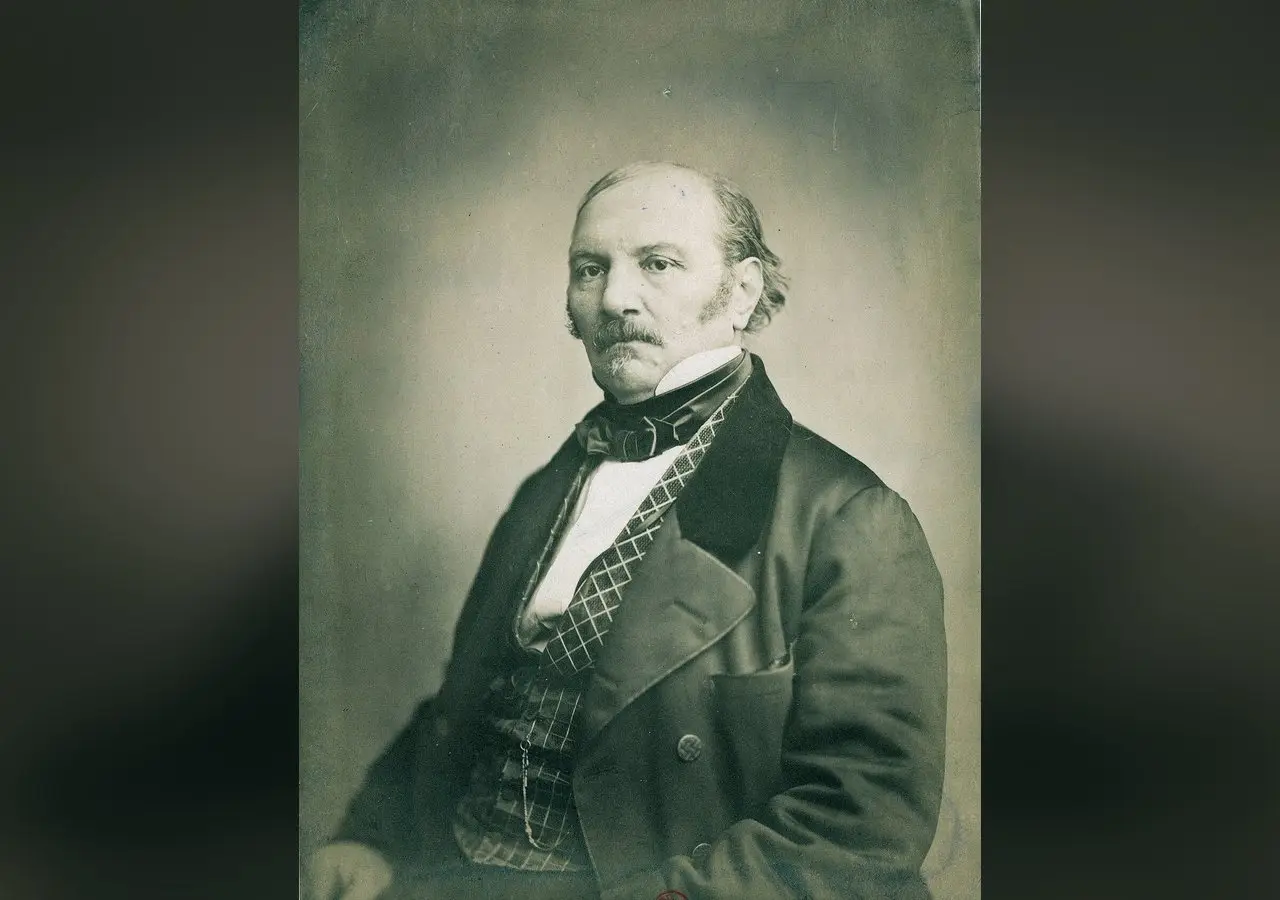
Cover image: photographic portrait of Allan Kardec, before 1870, public domain, collection of the National Library of France (Gallica), via Wikimedia Commons, resized image (https://commons.wikimedia.org/wiki/File:Photo_Kardec.jpg).